
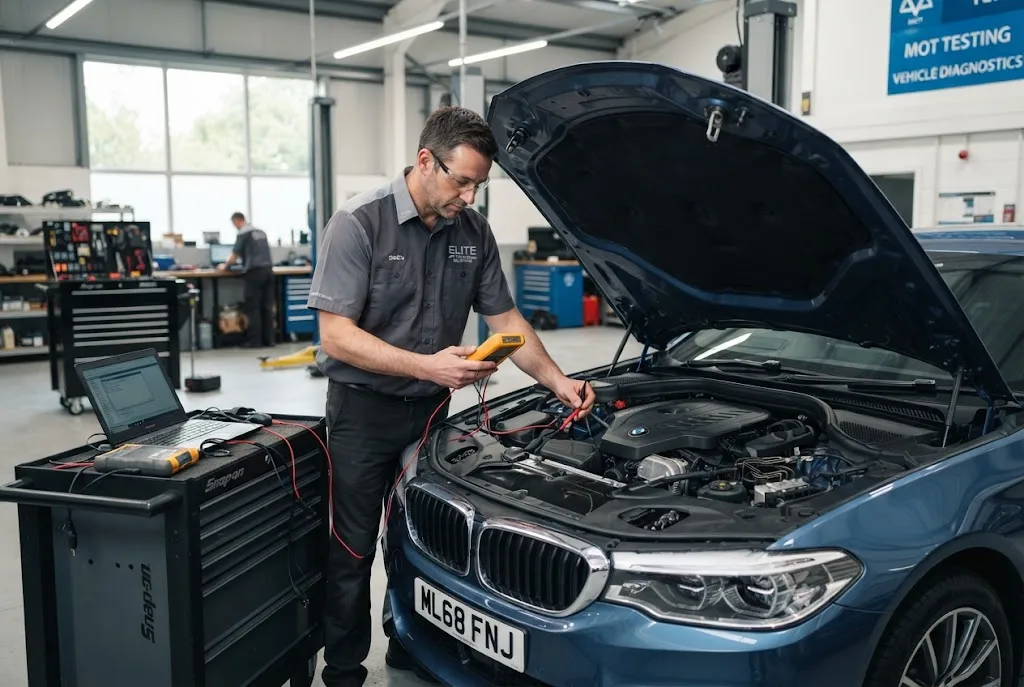
Car auto electrics are responsible for far more than starting your vehicle or switching on the lights. Modern cars depend on electrical systems for engine management, braking assistance, sensors, charging, starting, lighting, security and many comfort features. When one part develops a fault, the symptoms can range from a simple warning light to a vehicle that will not start.
Understanding common car electrical problems can help UK drivers decide when a simple check is appropriate and when professional diagnosis is needed. This guide covers common electrical faults, ABS issues, starter problems, belts, warning signs and what to consider when choosing an automotive electrical specialist.
What Are Car Auto Electrics?
Car auto electrics refers to the electrical and electronically controlled systems used throughout a vehicle. These systems can include the battery, alternator or charging system, starter motor, lighting, sensors, wiring, control modules and electronic safety systems.
Modern vehicles contain multiple interconnected systems. A fault in one area can sometimes create symptoms somewhere else. For example, a weak battery may cause several dashboard warnings, while damaged wiring can interfere with sensors or electrical components.
That is why diagnosing a fault correctly is often more useful than simply replacing the component that appears to be causing the problem.
Common Car Electrical Problems
Electrical faults can develop gradually or appear without much warning. Some of the most common problems include battery issues, charging faults, starter motor problems, damaged wiring, failed lights, faulty sensors and problems with electrical accessories.
Battery and Charging Problems
The battery supplies electrical power when the engine is not running and provides the initial power required by the starter system. Once the engine is running, the charging system helps maintain the vehicle’s electrical supply and recharge the battery.
If the battery is weak or the charging system is not operating correctly, you may experience slow starting, dim lights or repeated starting problems. In some cases, several warning lights can appear because modern vehicles rely heavily on stable electrical voltage.
Drivers experiencing repeated battery problems should avoid assuming that the battery itself is always the cause. A charging fault or parasitic electrical drain may need to be investigated.
Starter Motor Faults
The starter motor turns the engine when you start the vehicle. If it develops a fault, you might hear a clicking noise, experience slow cranking or find that the engine does not turn over at all.
However, a no-start condition can have several causes. A mechanic may need to check the battery, starter circuit, connections and starter motor before recommending an engine starter repair.
Lighting and Wiring Faults
Headlights, brake lights, indicators, hazard lights and other vehicle lighting depend on electrical connections and components working correctly.
GOV.UK guidance states that required lamps are checked during the MOT, including their condition, security and operation. Electrical wiring is also among the vehicle components considered during the MOT process. :contentReference[oaicite:0]{index=0}
If a light repeatedly fails after a bulb has been replaced, the underlying issue could involve a connector, fuse, wiring problem, switch or control module rather than the bulb itself.
When Should You Visit an Auto Electrical Specialist?
Some electrical problems are easy to identify, but intermittent faults can be considerably harder to diagnose. Professional assistance is particularly useful when the same electrical fault keeps returning or when several systems appear to be affected simultaneously.
Drivers may search for an auto electrical specialist near me when they experience problems such as:
- A car that repeatedly fails to start
- Electrical accessories that stop working
- Warning lights that appear unexpectedly
- Repeated battery discharge
- Lights that flicker or fail
- Electrical faults that occur intermittently
- Problems with vehicle sensors
- ABS or other electronic safety-system warnings
If you are specifically searching for an auto electrician near me within 5 mi, check that the business has experience with your vehicle type and the particular electrical system requiring attention.
ABS Sensor Replacement and Anti-Lock Brake Problems
The anti-lock braking system, commonly known as ABS, uses wheel-speed information and electronic controls to help manage braking when the system detects wheel lock-up conditions. A fault can trigger an ABS warning light on the dashboard.
One possible cause is a damaged or faulty wheel-speed sensor. This can lead to an ABS sensor replacement being recommended after diagnostic testing.
However, an ABS warning does not automatically mean that the sensor is defective. Wiring, connectors, sensor rings and other components can also be involved. A proper diagnostic process should therefore identify the fault before parts are replaced.
The UK MOT inspection manual specifically covers ABS systems and states that warning-device faults, damaged wheel-speed sensors, damaged wiring and certain other ABS defects can result in a major defect classification. :contentReference[oaicite:1]{index=1}
If an ABS warning remains illuminated, it should not be ignored. GOV.UK also advises drivers that they remain responsible for ensuring their vehicle is safe to drive even when it has a current MOT certificate. :contentReference[oaicite:2]{index=2}
Car Rotor and Electrical Diagnosis
The term car rotor can refer to different vehicle components depending on the context. In braking discussions, it commonly refers to a brake disc, while in electrical discussions it can relate to rotating components within certain systems.
This distinction matters because a brake-disc problem is different from an electrical fault. If a vehicle has braking vibration, unusual noises or an ABS warning, the braking and electronic systems may need to be assessed together.
A diagnostic inspection can help determine whether the issue involves a mechanical brake component, an ABS sensor, wiring or another electronic component.
Automotive Drive Belts and Fan Belts
Not every engine component that drivers associate with electrical problems is actually electrical. Belts are a good example. Modern engines use belts to drive various auxiliary components, and a worn belt can create symptoms that drivers may initially interpret as a broader vehicle fault.
Automotive drive belts can transmit power from the engine to components such as the alternator and other accessories, depending on the vehicle design. Older terminology may also refer to some applications as automotive fan belts.
A damaged or deteriorated belt can squeal, crack, slip or eventually fail. Because some auxiliary systems may depend on belt-driven components, a belt problem can potentially have wider consequences.
What Is an Aux Belt on a Car?
An aux belt car component is commonly known as an auxiliary belt. The phrase auxiliary belt car therefore describes the belt used to drive auxiliary components on many engines.
Depending on the vehicle, the auxiliary belt may drive the alternator, air-conditioning compressor, power-steering pump or other accessories. The exact arrangement varies between engines.
Because of these differences, the correct belt must be selected for the specific vehicle and engine rather than relying only on appearance.
Engine Belt Replacement and Serpentine Belts
Engine belt replacement can refer to different belts, so it is important to establish exactly which component needs attention. An auxiliary belt is not necessarily the same thing as a timing belt, and the replacement requirements differ.
Many modern engines use a serpentine belt, which travels around several pulleys and drives multiple accessories. If this belt becomes worn or damaged, a mechanic may recommend serpentine belt replacement.
The price of serpentine belt installation cost depends on the vehicle, belt design, access and labour required. A straightforward belt replacement may be relatively simple, while restricted access or additional worn components can increase the overall repair time.
Drivers should therefore ask for a vehicle-specific quote rather than relying on a generic online price.
Signs Your Car May Have an Electrical Fault
Electrical faults can produce a wide range of symptoms. Some warning signs deserve prompt investigation, particularly when they affect starting, braking or essential lighting.
- Repeated difficulty starting the engine
- Dashboard warning lights that remain illuminated
- Headlights or other lights becoming unusually dim
- Electrical accessories working intermittently
- Battery repeatedly going flat
- Unusual clicking when attempting to start the car
- ABS warning light remaining on
- Flickering lights or inconsistent electrical behaviour
- Burning smells around electrical components
- Visible damage to wiring or connectors
A burning smell, smoke or obvious wiring damage should be treated seriously. Switch the vehicle off when it is safe to do so and seek professional assistance rather than continuing to operate a potentially damaged electrical system.
How Car Electrical Faults Are Diagnosed
Professional diagnosis usually begins by discussing the symptoms and checking the vehicle’s visible electrical components. Depending on the fault, the mechanic may inspect battery voltage, charging performance, fuses, wiring, connections and relevant components.
Modern vehicles may also require electronic diagnostic equipment to communicate with control modules and identify stored fault codes. A diagnostic code can provide an important clue, but it does not always mean that the named component itself has failed.
For example, an ABS-related code may point toward a sensor circuit while the actual cause could involve wiring or another part of the system. Testing the relevant circuit can help avoid unnecessary replacement.
How Much Do Auto Electrical Repairs Cost?
There is no single car electrical repair price because electrical faults vary significantly in complexity. Replacing a simple bulb or fuse is very different from tracing an intermittent wiring fault or replacing a major electronic component.
The final price can depend on diagnostic time, parts, labour, vehicle accessibility and whether additional components need to be removed to reach the affected system.
When requesting a quote, ask whether diagnostic work is included and whether the price covers parts and labour. This makes it easier to compare quotations from different garages or auto electricians.
Choosing an Auto Electrician Near You
When searching for an auto electrician near me, location is useful, but it should not be the only consideration. Electrical faults often require systematic testing, so experience and diagnostic capability are important.
Before booking, consider whether the provider:
- Works regularly on your vehicle make and model
- Handles diagnostic and electrical faults
- Can diagnose ABS and sensor-related problems
- Provides clear quotations
- Explains the cause of the fault before replacing parts
- Offers appropriate warranty information for replacement components
For broader maintenance requirements, drivers can also consider a vehicle health check. This can be useful when an electrical warning appears alongside other vehicle symptoms.
If the vehicle’s starting problem turns out to be battery-related, understanding replacing a car battery can help you compare the available service options.
Car Auto Electrics and MOT Preparation
Electrical systems matter during an MOT because several safety-related components are inspected. GOV.UK’s MOT guidance includes lamps, electrical equipment and wiring, while the braking section covers ABS and electronic braking systems where fitted. :contentReference[oaicite:3]{index=3}
However, an MOT should not be treated as a substitute for routine maintenance. GOV.UK advises drivers to check that lights and brakes work and to follow the vehicle handbook for maintenance items such as the battery and servicing. :contentReference[oaicite:4]{index=4}
If your dashboard has warning lights or you already know about an electrical fault, dealing with it before the MOT can help avoid an unexpected failure or advisory.
Final Thoughts
Car auto electrics have become an essential part of modern vehicle maintenance. From batteries and starter motors to ABS sensors, wiring, lighting and electronic control systems, electrical components influence both everyday convenience and vehicle safety.
The key is accurate diagnosis. A flat battery does not always mean the battery needs replacing, just as an ABS warning does not automatically mean the sensor itself has failed. Professional testing can identify the underlying problem and reduce the risk of unnecessary parts replacement.
Whether you need an engine starter repair, ABS sensor replacement, belt inspection or wider electrical diagnosis, choose a qualified service provider that can explain the work required and provide a transparent quote. Regular maintenance and prompt attention to warning signs can help keep your vehicle reliable and roadworthy.