
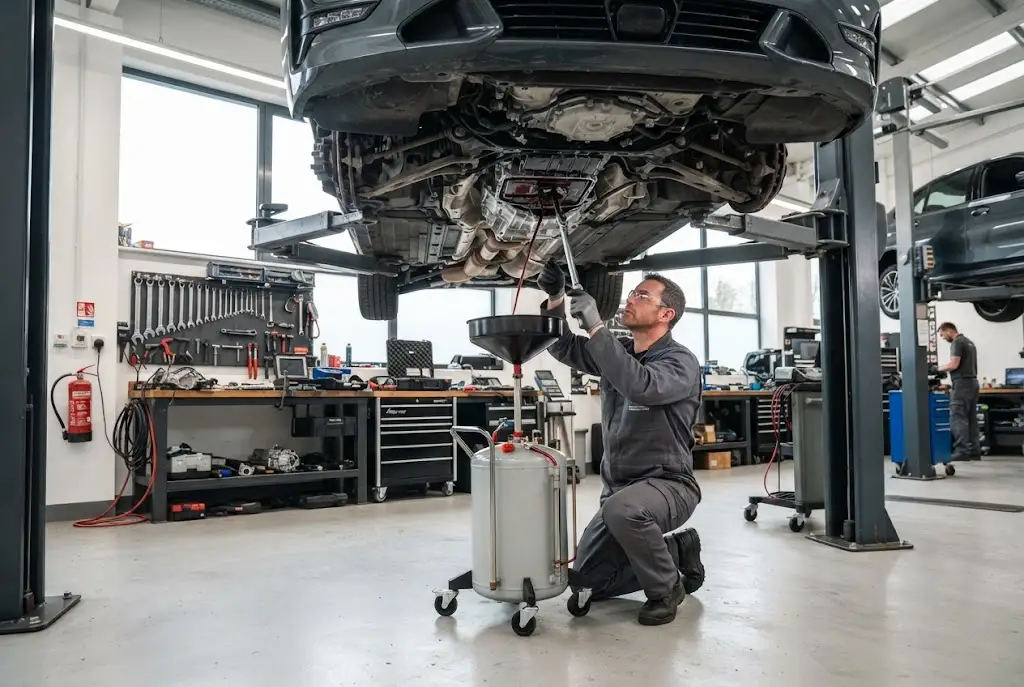
Gearbox service cost can vary significantly depending on the vehicle, transmission type, fluid specification and amount of work required. Whether you drive a manual, conventional automatic, dual-clutch or another type of transmission, regular maintenance can help identify problems before they develop into expensive repairs.
For automatic vehicles in particular, transmission fluid plays an important role in lubrication, cooling and gear operation. Over time, fluid can deteriorate or become contaminated, while leaks and worn components can affect transmission performance. This guide explains what a gearbox service involves, what affects the price and which warning signs should not be ignored.
What Is a Gearbox Service?
A gearbox service is a maintenance procedure designed to inspect and, where required, service the vehicle’s transmission system. The exact work depends on the type of gearbox and the manufacturer’s maintenance requirements.
Depending on the vehicle, a service can include checking the gearbox for leaks, inspecting the condition and level of transmission fluid, replacing fluid and filters where specified, and checking for signs of abnormal operation.
An automatic transmission may require more specialised procedures than a conventional manual gearbox because automatic systems use fluid for lubrication, cooling and hydraulic operation.
What Does a Gearbox Service Include?
There is no universal gearbox service package. Different manufacturers and transmission types have different requirements. A professional service may include several of the following checks.
Transmission Fluid Inspection
Transmission fluid condition is an important part of automatic gearbox maintenance. The fluid helps lubricate and cool internal components while also supporting the hydraulic functions required for gear changes.
Some vehicles have a dipstick, while others use sealed transmission systems that require a specific inspection procedure. The vehicle’s manual should be consulted for the correct method and fluid specification.
Fluid Replacement
Where the manufacturer’s maintenance schedule calls for it, old fluid can be drained and replaced with the correct specification of new fluid.
The exact procedure depends on the transmission. Some services may involve a simple drain and refill, while others may include filter replacement or additional procedures.
Leak Inspection
A gearbox service can also provide an opportunity to inspect for fluid leaks around the transmission, seals, pipes and associated components.
A low fluid level should not simply be corrected without considering why it became low. A leak may need to be repaired to prevent the problem from returning.
Diagnostic Checks
Modern automatic transmissions can contain electronic control systems and sensors. If a vehicle has warning lights, delayed gear engagement, harsh shifting or other unusual behaviour, diagnostic testing may be recommended alongside physical inspection.
How Much Is a Gearbox Service?
Drivers searching for how much is a gearbox service will find that prices vary because there is no single standard service procedure for every vehicle.
The final price can depend on:
- The type of transmission
- The vehicle make and model
- The type and quantity of transmission fluid required
- Whether a transmission filter needs replacing
- Labour rates
- Access to the gearbox
- Whether diagnostic testing is required
- Whether additional faults are discovered
A straightforward maintenance service will generally cost less than a repair involving worn components, fluid leaks or transmission faults. For this reason, a vehicle-specific quotation is more useful than relying on a generic online average.
Automatic Transmission Service Cost
Automatic transmission service cost can be higher than some basic manual gearbox maintenance because automatic transmissions are technically complex and can require specialist fluids and procedures.
The transmission may use hydraulic pressure, electronic controls, torque converters, clutches and multiple internal components to manage gear changes. The appropriate service procedure therefore depends heavily on the particular gearbox design.
RAC guidance explains that automatic transmission fluid lubricates and cools transmission components and helps provide the hydraulic functions required for operation. It also notes that different vehicles and transmission types require different fluids. :contentReference[oaicite:0]{index=0}
Automatic Gearbox Service Cost: What Can Increase the Price?
Automatic gearbox service cost can increase when the vehicle requires additional parts or specialist procedures.
For example, some transmissions may require a fluid and filter change, while others have more complex servicing requirements. Access can also affect labour time.
If the vehicle has a transmission warning light or unusual shifting behaviour, diagnostic work may be needed before servicing can be completed. A service designed for routine maintenance should not be confused with a repair for an already damaged transmission.
Automatic Transmission Service vs Transmission Repair
Routine servicing and transmission repair are different types of work.
A service is generally intended to maintain the transmission and inspect its condition. A repair addresses a known or suspected fault, such as a leak, failed sensor, worn component or internal transmission problem.
This distinction is important when comparing quotes. A low advertised service price may cover only fluid replacement, while a vehicle showing symptoms may require diagnosis and additional repairs.
Automatic Transmission Fluid Change
An automatic transmission fluid change replaces used transmission fluid with the correct new fluid. The process varies by vehicle, and some transmissions may require additional procedures to achieve the correct fluid level.
Transmission fluid gradually loses some of its effectiveness as it is exposed to heat, pressure and normal operating wear. Contamination can also affect its condition.
RAC guidance notes that automatic transmission fluid can deteriorate over time and that driving conditions such as frequent stop-start driving, towing or extreme temperatures can affect fluid life. :contentReference[oaicite:1]{index=1}
Auto Gearbox Oil Change: Is It Necessary?
An auto gearbox oil change may be required when specified by the vehicle manufacturer or when inspection indicates that the fluid needs attention.
However, drivers should not assume that every automatic gearbox uses the same fluid or follows the same service interval. Using the wrong fluid can create serious transmission problems.
Always check the manufacturer’s requirements or have a qualified technician identify the correct fluid before any transmission oil is added or replaced.
What Is Auto Transmission Oil?
The phrase auto transmission oil is sometimes used generally to describe fluid used in an automatic gearbox. In many automatic vehicles, the correct term is automatic transmission fluid, or ATF.
ATF is specially formulated for the requirements of automatic transmissions. It can provide lubrication, cooling and hydraulic functions, so it should not be treated as interchangeable with engine oil or manual gearbox oil.
RAC guidance also distinguishes automatic transmission fluid from gearbox oil used in manual transmissions because the fluids are designed for different operating requirements. :contentReference[oaicite:2]{index=2}
What Is Auto ATF?
Auto ATF generally refers to automatic transmission fluid. The correct specification is extremely important because automatic transmissions are designed around particular fluid characteristics.
Before topping up or changing ATF, check the vehicle handbook or manufacturer’s technical requirements. If you are unsure, a qualified transmission specialist should identify the correct fluid.
Some automatic transmissions are sealed and do not have a conventional dipstick. In those cases, checking the level may require a particular temperature, procedure or diagnostic equipment. :contentReference[oaicite:3]{index=3}
Signs Your Automatic Gearbox Needs Attention
Transmission problems can produce noticeable changes in the way a car drives. Some symptoms should be investigated promptly rather than waiting until the next scheduled service.
Slipping Gears
Gear slipping can occur when the transmission does not remain properly engaged or changes gear unexpectedly. Low or deteriorated fluid can be one possible cause, but internal wear and other faults can also produce similar symptoms.
Delayed Gear Engagement
A noticeable delay when selecting Drive or Reverse can indicate a transmission problem. It may relate to fluid condition, hydraulic operation, electronic controls or internal components.
Harsh or Jerky Shifting
If gear changes become unusually harsh, jerky or inconsistent, the transmission should be assessed. A fluid issue is possible, but a professional should determine the underlying cause.
Unusual Noises
Grinding, whining, clunking or other unusual transmission noises should not be ignored. These sounds can indicate mechanical wear or another fault requiring diagnosis.
Burning Smell
A burnt smell associated with transmission fluid can indicate overheating or fluid deterioration. RAC guidance identifies a burnt odour as a warning sign that the transmission should be checked. :contentReference[oaicite:4]{index=4}
Transmission Maintenance Cost: Service or Repair?
Transmission maintenance cost should be considered separately from the potential cost of repairing a failed gearbox.
Routine maintenance may involve fluid inspection or replacement, while a transmission repair can involve seals, sensors, clutches, solenoids or internal components. The difference can be substantial.
This is one reason early diagnosis matters. If a car begins slipping, delaying an inspection may allow an initially manageable issue to develop into a more complicated repair.
How Often Should Automatic Transmission Fluid Be Changed?
There is no universal interval that applies to every automatic transmission. The manufacturer’s service schedule should take priority.
RAC guidance gives a general range of 30,000 to 60,000 miles for some automatic transmission fluid changes but explicitly advises drivers to check the vehicle’s manual because the correct interval depends on the transmission and driving conditions. :contentReference[oaicite:5]{index=5}
Some newer transmission designs may have different requirements. For example, RAC’s recent guidance on DSG transmissions explains that fluid and filter intervals can vary significantly between DSG types. :contentReference[oaicite:6]{index=6}
DSG and Other Specialist Automatic Gearboxes
Not all automatic transmissions operate in the same way. Dual-clutch systems such as DSG gearboxes use a different design from conventional torque-converter automatics.
Because of these technical differences, specialist transmissions may require specific fluids, filters, tools and procedures. RAC recommends using an expert for DSG servicing and stresses the importance of following the vehicle’s specific maintenance guidance. :contentReference[oaicite:7]{index=7}
If your car uses a DSG, dual-clutch or another specialist transmission, confirm that the garage has experience with the specific gearbox before booking a service.
What Is a Transmission Service Price Based On?
A transmission service price is usually based on the work required rather than simply the vehicle’s size.
Before accepting a quotation, ask whether it includes:
- Transmission fluid
- Fluid drain and refill
- Filter replacement where applicable
- Labour
- Fluid-level adjustment
- Diagnostic checks
- Inspection for leaks
This helps you compare like-for-like quotations and avoid unexpected charges.
Can You Service an Automatic Gearbox Yourself?
Some basic fluid checks may be possible for experienced vehicle owners, but automatic transmission servicing can require precise procedures and specialist equipment.
For example, the correct fluid level may depend on transmission temperature and the manufacturer’s specified checking procedure. Sealed systems may require additional equipment or a particular workshop process.
RAC advises that incorrect fluid checking can potentially cause long-term damage and recommends professional assistance when drivers are unsure about the correct procedure. :contentReference[oaicite:8]{index=8}
How to Choose a Gearbox Service Provider
When choosing a garage for an automatic transmission service, look for evidence that the provider understands the specific transmission fitted to your car.
Ask whether they can:
- Identify the correct transmission fluid
- Follow the manufacturer’s service procedure
- Diagnose transmission fault codes
- Inspect for leaks
- Replace transmission filters where required
- Explain additional repairs before carrying them out
A specialist can be particularly valuable when the vehicle is already showing symptoms. A routine service should not be used as a substitute for diagnosing an active transmission fault.
Gearbox Service and Your Wider Maintenance Plan
Transmission maintenance should form part of a wider vehicle maintenance routine. A vehicle health check can help identify other issues that may affect reliability before they become serious.
If electrical warning lights or sensor problems accompany a transmission issue, a professional car auto electrics inspection may also be appropriate.
Keeping an accurate car service history can help establish when previous transmission maintenance was completed and which fluids or components have already been serviced.
Frequently Asked Questions About Gearbox Service Cost
How much is a gearbox service?
The price depends on the vehicle, transmission type, fluid, filters, labour and service procedure. A vehicle-specific quotation is the best way to establish the actual cost.
What is included in an automatic transmission service?
Depending on the vehicle, it can include fluid inspection or replacement, filter replacement, leak checks, fluid-level adjustment and diagnostic assessment.
How often should automatic transmission fluid be changed?
The correct interval varies by vehicle and transmission. Always follow the manufacturer’s service schedule rather than applying a universal interval.
Can low transmission fluid cause gear problems?
Low fluid can affect automatic transmission operation and may contribute to shifting problems. However, low fluid can also indicate a leak, so the cause should be investigated.
Is gearbox oil the same as automatic transmission fluid?
No. Manual gearbox oil and automatic transmission fluid are designed for different applications. The correct fluid specification must be used for the particular transmission.
Should I service an automatic gearbox if it is working normally?
If the manufacturer specifies transmission maintenance, following that schedule is sensible even when the gearbox appears to work normally. Preventive maintenance can help identify developing issues before they become major problems.
Final Thoughts
Gearbox service cost depends on the vehicle and the transmission work required, so there is no single price that applies to every UK car. A routine automatic transmission service may involve fluid replacement and inspection, while a vehicle with slipping gears, delayed engagement or unusual noises may need more detailed diagnosis and repair.
The most important step is to use the correct fluid and service procedure for the specific transmission. Automatic gearboxes are complex systems, and using an unsuitable fluid or incorrect maintenance process can create unnecessary problems.
For UK drivers, following the manufacturer’s maintenance schedule, responding to transmission warning signs and choosing a suitably experienced service provider can help protect gearbox performance and reduce the risk of avoidable repair costs.