
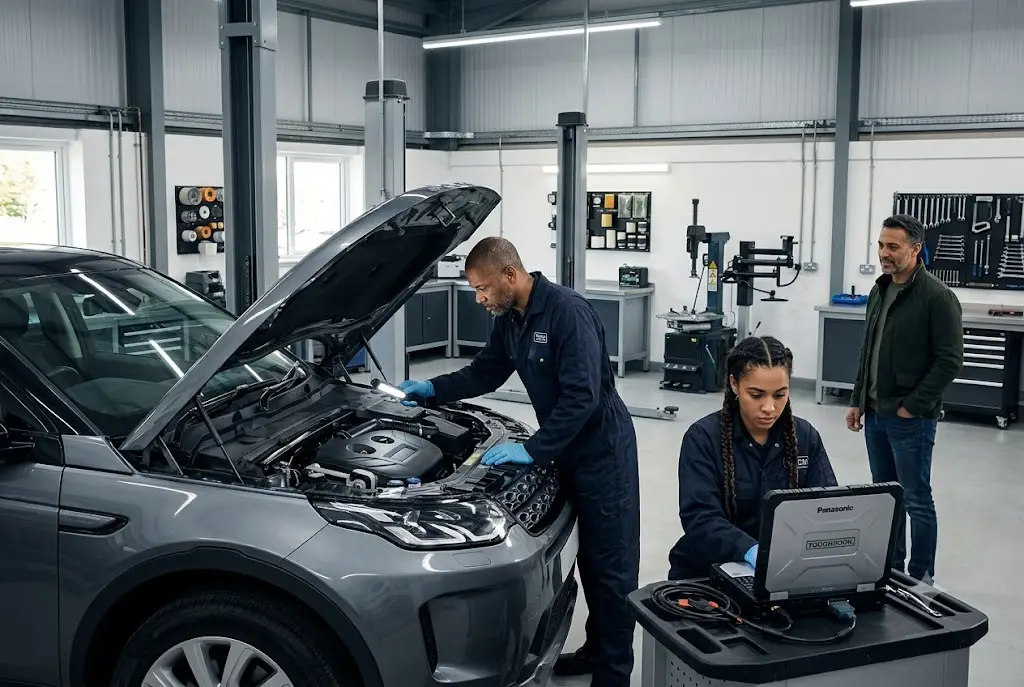
Many drivers book a service every year without fully understanding what actually takes place during the appointment. If you’ve ever wondered what a full service car includes, you’re not alone.
A full service is one of the most important maintenance procedures for keeping a vehicle safe, reliable, and efficient. While the exact checklist can vary slightly between garages and manufacturers, most reputable service centres follow a comprehensive inspection process designed to identify wear, maintain performance, and prevent costly future repairs.
This guide explains what a car service entails, which components are inspected, and why regular servicing remains an essential part of vehicle ownership in the UK.
What Is a Full Car Service?
A full car service is a detailed maintenance inspection typically recommended every 12 months or according to the manufacturer’s mileage schedule.
Unlike an interim service, which focuses on basic maintenance items, a full service involves a broader examination of key vehicle systems. The objective is to ensure the vehicle remains roadworthy, efficient, and safe between MOT inspections.
If you’re comparing service types and costs, our guide on how much is a car service explains the differences between interim, full, and major servicing.
What Does a Car Service Entail?
A full service covers a wide range of inspections, adjustments, and maintenance procedures.
Although manufacturers may have specific requirements for individual models, most full services include checks across the engine, braking system, steering, suspension, tyres, fluids, electrical systems, and safety equipment.
Engine Oil and Oil Filter Replacement
One of the most important elements of a full service is replacing the engine oil and oil filter.
Fresh engine oil helps lubricate moving parts, reduce wear, regulate temperature, and improve engine efficiency. Over time, oil degrades and becomes contaminated, reducing its effectiveness.
The oil filter is replaced at the same time to ensure contaminants are removed from the lubrication system.
Drivers interested in this specific maintenance task can also read our guide on car oil and filter change.
Fluid Level Checks
Modern vehicles rely on several critical fluids to operate safely and efficiently.
During a full service, technicians typically inspect and top up:
- Engine coolant
- Brake fluid
- Power steering fluid (where applicable)
- Windscreen washer fluid
- Transmission fluid (where applicable)
Any signs of contamination, leaks, or abnormal fluid condition may require further investigation.
Brake System Inspection
The braking system is one of the most important safety features on any vehicle.
During servicing, mechanics assess:
- Brake pads
- Brake discs
- Brake lines
- Brake fluid condition
- Overall braking performance
Identifying brake wear early can help prevent expensive repairs and improve safety.
Tyre Inspection
Tyres are carefully examined for condition, tread depth, inflation levels, and signs of uneven wear.
Incorrect tyre pressure or uneven wear patterns can affect handling, braking performance, fuel economy, and tyre lifespan.
Servicing often provides an opportunity to identify alignment or suspension issues before they become more serious.
Suspension and Steering Checks
Suspension and steering components play a vital role in vehicle stability and driver control.
Technicians inspect components such as:
- Shock absorbers
- Springs
- Bushes
- Ball joints
- Steering linkages
Signs of wear can affect ride quality, tyre wear, and overall handling.
Battery and Electrical System Testing
Modern vehicles depend heavily on electrical systems.
During a full service, mechanics typically assess battery condition, charging performance, and visible electrical components.
Faulty batteries often give little warning before failure, making preventative testing particularly valuable.
Lights and Visibility Checks
All exterior lights are normally inspected to ensure they are functioning correctly.
This includes:
- Headlights
- Brake lights
- Indicators
- Fog lights
- Number plate lights
Wiper blades, washer systems, and windscreen condition may also be checked to maintain safe visibility.
Air Filter Inspection
The engine air filter helps prevent dirt and debris from entering the engine.
A blocked filter can reduce engine performance and fuel efficiency. Depending on its condition, the filter may be cleaned or replaced.
Some vehicles also include cabin pollen filters, which help improve air quality inside the vehicle.
Exhaust System Examination
Technicians inspect the exhaust system for corrosion, leaks, mounting issues, and signs of excessive emissions.
Problems identified during servicing can often be addressed before they lead to MOT failures.
The UK government provides useful guidance regarding vehicle maintenance and roadworthiness through the official MOT guidance.
How Long Does a Full Service Take?
Most full services take between two and four hours, depending on the vehicle, workshop workload, and whether additional issues are identified.
Complex vehicles and premium models may require additional inspection time.
How Much Does a Full Service Usually Cost?
The cost varies depending on vehicle type, location, and service provider.
Most UK drivers can expect a full service to cost somewhere between £150 and £350, although premium vehicles may cost more.
For a detailed pricing breakdown, see our guide on full car service cost.
Is a Full Service the Same as an MOT?
No. A full service and MOT are separate procedures.
An MOT is a legal roadworthiness inspection, while a service focuses on maintenance and preventative care.
Many drivers arrange both together to simplify annual maintenance planning.
Our guide on how much is MOT and service explains the costs and benefits of combining both appointments.
Why Regular Servicing Matters
Regular servicing helps maintain vehicle reliability, supports safety, improves fuel efficiency, and may protect resale value through a documented service history.
More importantly, routine inspections allow technicians to identify developing issues before they become expensive repairs.
Drivers comparing garages and maintenance packages may also find our car service comparison guide helpful when choosing a provider.
Final Thoughts
Understanding what does a car service entail helps motorists appreciate the value of routine vehicle maintenance. A full service covers far more than an oil change, involving detailed inspections of major safety, performance, and reliability systems throughout the vehicle.
Whether your goal is reducing repair costs, maintaining manufacturer recommendations, or improving long-term reliability, annual servicing remains one of the most effective investments you can make in your vehicle.
Understanding the intricacies of a full vehicle service is crucial for any car owner, as it lays the foundation for the long-term health of the vehicle. Among the myriad components assessed during a full service, attention to the electrical systems is paramount. Issues related to auto electrics can often go unnoticed until they manifest as larger, more costly problems. This is where an understanding of car auto electrics becomes invaluable. By familiarizing oneself with common electrical faults, such as those involving ABS sensors and starter motors, drivers can proactively address potential issues before they escalate. Regular servicing not only enhances performance but also safeguards against the complexities of electrical failures that can disrupt daily commutes or even lead to emergency repairs. As such, integrating knowledge of both preventive maintenance and electrical system health forms a comprehensive approach to vehicle ownership.