
Understanding tyre repair cost is important for every UK driver. Whether you’ve picked up a nail on the motorway, discovered a slow puncture, or noticed a loss of pressure before a journey, knowing your repair options can save both time and money. In many situations, a damaged tyre can be repaired safely, avoiding the need for a full replacement.
However, not every puncture is repairable. The location of the damage, tyre condition, and safety regulations all influence whether a repair is possible. This guide explains tyre repair costs, common repair methods, and how to decide between repairing and replacing a tyre.
What Is a Tyre Repair?
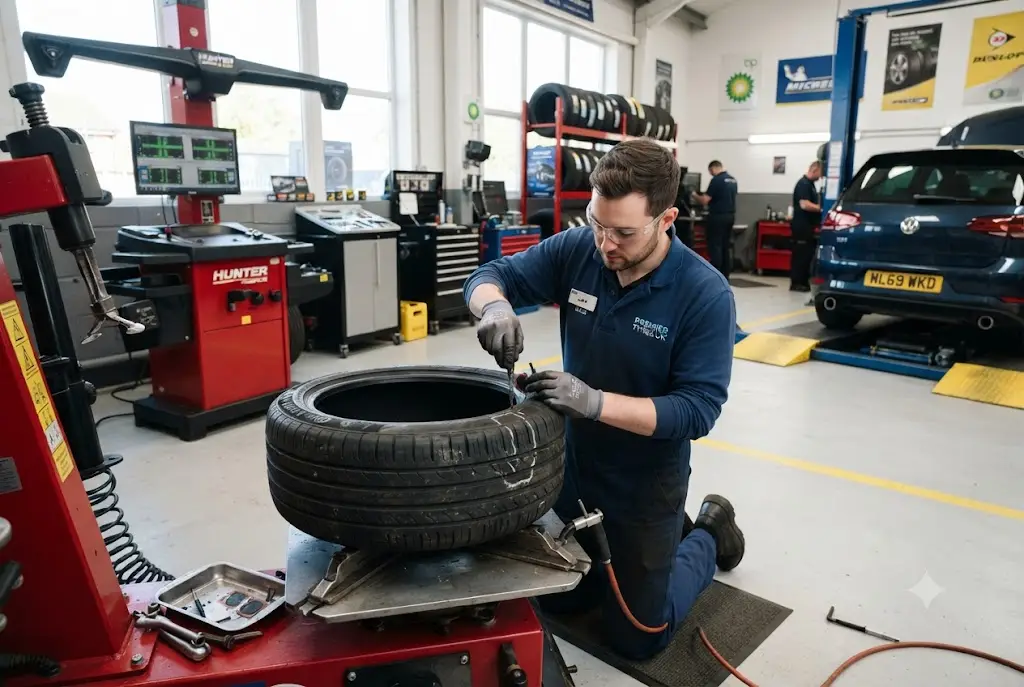
A tyre repair is a professional process used to restore a damaged tyre to a safe, roadworthy condition. Most repairs involve sealing punctures caused by nails, screws, or other road debris.
A professional tyre technician will inspect the tyre internally and externally before determining whether a repair meets British safety standards.
The goal of a proper tyre fix is not simply to stop air loss but to ensure the tyre remains structurally safe for continued use.
How Much Is a Tyre Repair?
One of the most common questions motorists ask is: how much is a tyre repair?
The answer depends on several factors, including tyre size, damage location, repair method, and service provider. A simple puncture repair is generally more affordable than replacing the entire tyre, making repair an attractive option whenever safety standards allow.
Many garages offer fixed pricing for standard puncture repairs, while emergency roadside services may charge additional call-out fees.
Factors That Affect Tyre Repair Cost
Several variables influence the overall tyre repair cost:
- Location of the puncture
- Size of the damage
- Tyre condition and tread depth
- Vehicle type
- Tyre size and specification
- Mobile repair requirements
- Emergency service availability
A puncture in the central tread area is often repairable, while damage near the sidewall typically requires tyre replacement.
Car Puncture Repair Cost Explained
The car puncture repair cost varies depending on the severity of the damage and the repair technique used.
Modern repair methods typically involve removing the tyre from the wheel, inspecting it internally, and applying an approved repair patch or plug combination. This method provides a more reliable and long-lasting repair than temporary roadside solutions.
Drivers should be cautious of quick fixes that do not include a full internal inspection, as hidden structural damage may go unnoticed.
Car Tyre Puncture Repair Cost vs Replacement Cost
The car tyre puncture repair cost is usually significantly lower than the cost of purchasing and fitting a new tyre. However, there are situations where replacement is the only safe option.
A tyre may need replacing if:
- The sidewall is damaged
- The puncture is too large
- The tyre has multiple repairs
- Tread depth is already close to the legal limit
- Internal structural damage exists
In these cases, investing in a new tyre can provide greater safety and long-term value.
Common Types of Tyre Fix Methods
There are several methods used to perform a tyre fix. Professional repair centres typically use industry-approved procedures designed to maintain tyre integrity.
Patch Repairs
A patch is applied internally to seal the damaged area after a thorough inspection.
Plug Repairs
A repair plug fills the puncture channel and helps prevent air leakage.
Patch and Plug Combination Repairs
This is considered one of the most reliable repair methods because it seals both the puncture channel and the inner liner.
The exact method depends on the tyre’s condition and the location of the damage.
Tyre Repair Kits and Emergency Solutions
Many vehicles now include temporary repair products instead of spare wheels. These solutions can help drivers reach a repair centre safely but should not always be viewed as permanent fixes.
Common emergency options include:
- Puncture repair kits for cars
- Tyre repair kits
- Tyre repair kits for cars
- Car tyre repair kit solutions
- Kit tyre repair products
These products can temporarily seal small punctures and restore air pressure, allowing limited travel until professional inspection becomes available.
Are Tyre Repair Kits Safe?
Tyre repair kits provide convenience during emergencies, but they have limitations. Many manufacturers recommend professional inspection after any temporary repair has been used.
A repair kit may not be suitable if:
- The puncture is large
- The sidewall is damaged
- The tyre has suffered internal damage
- The tyre has been driven while severely underinflated
Professional assessment remains the safest option whenever tyre damage occurs.
When a Tyre Cannot Be Repaired
Not all punctures qualify for repair. Industry guidelines generally prohibit repairs in certain areas of the tyre, particularly near the shoulder and sidewall.
Tyres may also require replacement when:
- Steel belts are exposed
- Sidewall bulges exist
- Large cuts are present
- Tread wear is excessive
- Previous repairs compromise safety
A qualified technician should always determine whether repair remains safe and legal.
Preventing Future Tyre Damage
Although punctures cannot always be avoided, regular maintenance can reduce the risk of unexpected failures.
- Check tyre pressure regularly
- Inspect tread for embedded objects
- Avoid potholes where possible
- Monitor tyre wear patterns
- Replace worn tyres promptly
- Schedule routine inspections
Combining routine maintenance with professional tyre fitting services helps maximise tyre lifespan and vehicle safety.
Why Wheel Alignment Matters After a Repair
Uneven tyre wear often contributes to premature tyre failure. If technicians identify abnormal wear during a repair inspection, further checks may be recommended.
Many drivers benefit from professional tyre alignment and wheel balancing services to improve handling, extend tyre life, and reduce the likelihood of future tyre problems.
Tyres, Repairs, and Vehicle Safety
Tyres play a critical role in braking, steering, and road grip. Even a minor puncture should never be ignored.
According to the UK Government vehicle safety guidance, motorists should regularly inspect tyres for damage and maintain them in a safe condition.
Drivers should also ensure braking systems are functioning correctly, as tyre performance and braking effectiveness work together to support road safety. Regular service brake maintenance can further improve vehicle control and stopping performance.
Choosing a Professional Tyre Repair Provider
When selecting a tyre repair specialist, look for:
- Qualified technicians
- Transparent pricing
- Industry-approved repair methods
- Modern inspection equipment
- Positive customer reviews
- Warranty-backed repairs
A reputable provider will prioritise safety rather than recommending repairs simply to reduce costs.
Final Thoughts
Understanding tyre repair cost helps drivers make informed decisions when dealing with punctures and tyre damage. While many punctures can be repaired safely and economically, professional inspection is essential to determine whether repair or replacement is the correct solution.
By responding quickly to tyre damage, using approved repair methods, and maintaining your vehicle regularly, you can improve safety, extend tyre life, and avoid more expensive problems in the future.