
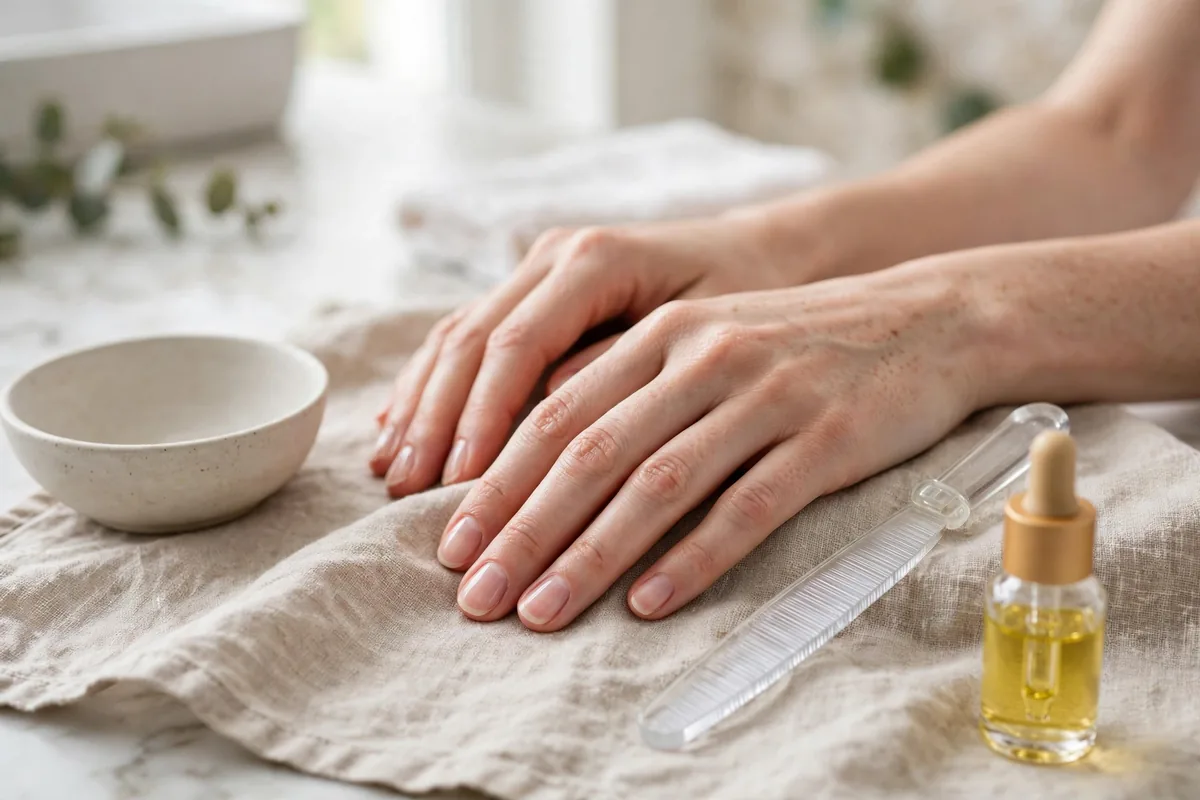
Strong, neat nails are rarely an accident. They are the result of small, repeatable habits rather than expensive treatments, and the good news is that most of them take minutes. These nail care tips bring together the essentials: how to trim and file without causing damage, how to look after cuticles properly, and how to strengthen nails that split, peel or bend. Whether your nails are bare most of the time or you treat them as part of your style, a simple routine done consistently will do more for them than any single wonder product.
The Basics: What Healthy Nails Actually Need
Nails are made of keratin, the same protein as hair, and they grow from the matrix hidden under the skin at the base of the nail. Because the visible nail is no longer living tissue, you cannot feed it back to health with a miracle cream; what you can do is protect it while it grows and keep it hydrated enough to stay flexible. Nails that dry out become brittle, and brittle nails split.
That is why the foundations of nail care look a lot like the foundations of skincare: gentle cleansing, regular moisture and protection from harsh chemicals. If you are building a wider routine from scratch, our beauty routine for beginners shows how nails fit alongside skin and hair care without adding much time to your day.
A Simple Weekly Nail Care Routine
A weekly session of ten minutes is enough for most people. Start by removing any old polish and washing your hands with mild soap. Trim nails with clean, sharp clippers, cutting straight across in small snips rather than one deep cut, which can stress the nail and cause splits. Keep length modest: nails that extend far past the fingertip are far more likely to catch and break.
Next, file gently in one direction with a fine-grit or glass file. Sawing back and forth frays the edge and invites peeling. Shape the free edge so it follows the natural curve of your fingertip, slightly rounded at the corners to reduce snagging. Soak fingertips in warm water for a couple of minutes if your cuticles need attention, then move to the steps below.
Finish with moisture. Massage a hand cream or a drop of cuticle oil into each nail and the skin around it. Doing this after your weekly session, and ideally after handwashing through the week, keeps the nail plate flexible. Think of it the same way you think about the products in our skincare product guide: a simple product used daily beats a complicated one used rarely.
Cuticle Care Without the Damage
The cuticle is the thin seal of skin that protects the growing nail from bacteria and moisture loss. It is a barrier, not an imperfection, and the kindest approach is to soften and gently push it back rather than cut it. After a shower or a warm soak, use a wooden orange stick or a soft pusher to ease the cuticle back towards the base of the nail.
Cutting cuticles at home is best avoided. Trimming live skin can break the seal, cause soreness and create an entry point for infection, which is why many professionals are cautious about it too. Hangnails are the exception: a single clean snip of the loose flap of skin, with disinfected clippers, stops it catching and tearing.
Cuticle oil is the one product worth buying specifically for nail care. Applied daily, it keeps the cuticle and the nail surface supple, which reduces the dry, ragged look that makes nails appear neglected even when they are clean.
Strengthening Weak or Brittle Nails
If your nails peel in layers, bend under light pressure or split at the sides, start with protection. Water is the biggest everyday culprit: nails absorb water, swell, then dry and shrink, and that constant flexing weakens them. Wear gloves for washing up, cleaning and gardening. It is an unglamorous tip, but it outperforms most strengthening treatments.
Choose removers carefully. Acetone-free polish remover is slower but gentler on dry nails. If you wear polish constantly, give nails a few bare days between applications so you can moisturise the plate itself and spot any changes early.
Hand hydration matters more than most people expect. The skin and nails lose moisture together, especially in winter and with frequent handwashing. The advice in our guide to dry skin care applies directly to hands: moisturise after washing, and keep a cream where you will actually use it. Our skin hydration tips make the same point for the face, and the habit transfers perfectly to nails.
Diet plays a supporting role. Nails reflect general nutrition, and persistent changes such as unusual ridges, colour changes or nails that suddenly become fragile are worth mentioning to a GP rather than treating at home.
Habits That Quietly Ruin Your Nails
Using nails as tools, opening cans, picking at labels, scraping pans, is the fastest route to chips and breaks. Biting and picking at the cuticle damage the matrix area and can permanently affect how the nail grows. Filing aggressively, buffing too often, and tearing off gel or acrylic coatings instead of removing them properly all thin the nail plate.
Another quiet culprit is constant exposure to detergents without gloves, followed by rich cream applied only occasionally. Nails respond to what you do every day, not what you do once a month. Small protections, repeated, are the entire secret.
Building Nail Care Into Your Wider Routine
The easiest way to keep these habits is to attach them to routines you already have. Keep a file and cuticle oil where you watch television or beside your skincare, and do the weekly shaping while something else is happening. Pair nail care with hair wash days: the same evening you give your hair a conditioning treatment, your nails get their oil and tidy. Our guide to frizzy hair care follows the same philosophy of gentle, consistent moisture.
Start where you are. If your nails are currently short and damaged, keep them short, protect them with gloves, moisturise daily, and let healthy growth replace the damage over a few months. Fingernails grow slowly, so judge progress monthly rather than weekly.
Good nail care is undramatic: trim carefully, file gently, protect the cuticle, moisturise often and wear gloves for wet work. Follow those nail care tips consistently and your nails will look cared for with very little effort, which is exactly what a good routine is for.