
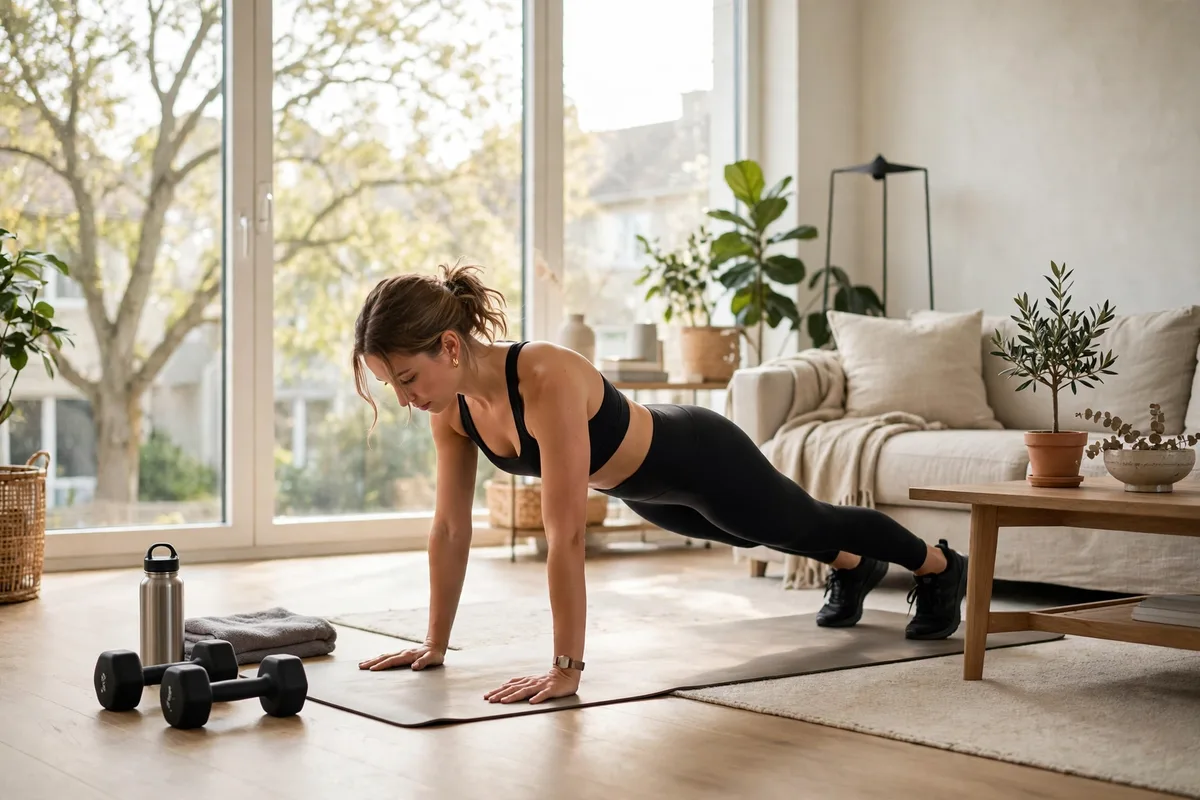
You do not need a gym membership, a room full of equipment or an hour of free time to start getting fitter. Home exercises for beginners work precisely because they remove every excuse: no commute, no monthly fee, no waiting for machines, and no audience. All you need is a small clear space, comfortable clothes and a plan simple enough to repeat. This guide walks you through warming up safely, the core bodyweight movements worth learning first, how to put them together into a weekly routine, and how to keep the habit alive once the first burst of motivation fades.
Why Home Exercises for Beginners Actually Work
The best exercise programme is the one you will still be doing in three months, and home workouts win on convenience. Ten to twenty minutes is enough for a useful session when you are starting out, and short sessions are far easier to fit around work, family and everything else. Bodyweight movements also teach you how your body moves — squatting, pushing, bracing your core — which builds a foundation that protects you in everyday life, from lifting shopping bags to gardening.
Start gently and expect the first week to feel like an experiment. Mild muscle tiredness the day after a session is normal when muscles are new to the work; sharp pain is not, and it is a signal to stop and rest. If you have a medical condition, an injury, or you are returning to exercise after a long break or illness, check with your GP before beginning — that one conversation makes everything that follows safer.
Warm Up First, Every Time
A warm-up takes three to five minutes and makes the whole session feel easier. March on the spot, gradually lifting your knees a little higher. Roll your shoulders forwards and backwards. Make gentle circles with your arms, then your hips. Finish with a few slow, shallow squats and some easy side steps. The goal is simply to feel warmer and breathe a little faster — you should never start the main exercises cold and stiff.
The Five Foundational Movements
Almost every beginner routine is built from the same handful of movements. Learn these five with good form, at a comfortable pace, before you worry about anything more advanced.
Sit-to-stand squats. Sit on a sturdy chair, feet flat and hip-width apart. Stand up fully, then sit back down slowly. The chair gives you a target and a safety net, and the movement is exactly the pattern you use dozens of times a day.
Wall press-ups. Stand facing a wall, hands flat at shoulder height, and walk your feet back a little. Bend your elbows to bring your chest towards the wall, then push back. As this gets easier over the weeks, move to a kitchen worktop, then a low step, to increase the challenge.
Glute bridges. Lie on your back, knees bent, feet flat. Push through your heels to lift your hips until your body forms a straight line from shoulders to knees, squeeze for a second, then lower slowly. Excellent for the back of the legs and the muscles that support your lower back.
Bird-dogs. On hands and knees, slide one arm forwards and the opposite leg backwards, keeping your back flat and still. Return and swap sides. This builds balance and core control without straining your neck or back.
Standing knee lifts and heel raises. Holding a chair back for balance, lift each knee towards hip height in a slow marching rhythm; then rise up onto your toes and lower with control. Together they look after your hips, calves and balance — unglamorous, and genuinely valuable.
A Simple Weekly Plan to Follow
For the first fortnight, aim for three sessions a week on non-consecutive days — Monday, Wednesday and Friday, for example. In each session, work through the five movements as a circuit: 8 to 10 repetitions of each, rest for a minute, then repeat the circuit a second time. The whole thing, warm-up included, takes about fifteen minutes. In weeks three and four, add a third circuit or a few extra repetitions, and add a daily walk on the days in between if you can — walking is the perfect partner to home exercise, free and endlessly adjustable.
Keep the barrier to starting as low as possible. Lay out your clothes the night before. Anchor the session to something you already do — after the morning kettle boils is a favourite, and if you are building a morning routine anyway, our guide to a beautiful coffee maker manual makes a surprisingly good companion read for turning that first coffee into a small daily ritual worth getting up for.
Recovery, Skin and the Rest Days That Matter
Progress happens between sessions, not during them, so treat recovery as part of the programme. Sleep properly, drink water through the day, and let genuinely tired muscles rest a day before working them again. Sweaty home workouts also make basic skin care more relevant: cleanse your face after exercising rather than letting sweat sit, especially if your skin is reactive. Our skincare product guide explains what each type of product actually does, and if your skin is easily irritated, the gentle approach in our sensitive skin care guide is the right starting point.
Rest days are also when you plan the life that exercise is meant to support. For many of our readers that means travel and property daydreams — browsing guides like our look at Whitewood SD real estate or the lakeside charm of Piseco Lake real estate is a pleasant way to spend a rest-day morning, and a reminder of why staying mobile and strong is worth fifteen minutes, three times a week.
How You Will Know It Is Working
Progress with home exercise rarely announces itself on the bathroom scales first. The early signs are practical: stairs feel shorter, the sit-to-stand that needed a push from your hands no longer does, a wall press-up count that started at eight is suddenly fifteen, and you notice you are sleeping more soundly on exercise days. Keep a simple note of your repetitions for each movement once a week. Watching those numbers creep up over a month is concrete proof that the fifteen minutes are doing something real, and on low-motivation days it is the most persuasive argument you own.
Staying Consistent After Week Four
Motivation starts home exercise; systems keep it going. Track your sessions on a calendar and protect the streak. When a movement becomes easy, slow it down, add repetitions or move to the harder variation rather than abandoning the routine. Expect the occasional missed week — holidays, illness and life happen — and simply restart at a slightly easier level instead of treating it as failure. Fifteen honest minutes at home, repeated for a year, will change how you move, sleep and feel far more than one heroic month in a gym you never wanted to join.