Bringing a puppy home is one of the happiest days a family can have, but the first month sets the tone for the dog your puppy will become. Good puppy training basics are not about strict drills or turning your kitchen into a parade ground. They are about short, kind, consistent routines that teach your puppy how life in your home works. This guide walks through the first four weeks step by step, from toilet training and sleep to the first commands and safe socialisation, so you can start as you mean to go on.
Before the First Day: Puppy-Proof Your Home
Training starts before the puppy arrives. Get down on your hands and knees and look at each room from puppy height. Move cables, shoes, cleaning products and anything chewable out of reach, and block off stairs and rooms that are out of bounds with a baby gate. Set up one defined area with a bed or crate, water bowl, and a few safe chew toys. Puppies learn fastest when the environment makes the right choice easy, so a tidy, prepared space does half the training work for you.
Stock up on the essentials in advance: a flat collar and lead, plenty of small training treats, enzymatic cleaner for accidents, and more chew toys than you think you need. If you are shopping for a new puppy owner as well as yourself, our gift guide for UK dog lovers has some lovely ideas that go beyond the basics.
Toilet Training: The First Puppy Training Basic
Toilet training is usually the first priority, and the rule is simple: take your puppy outside far more often than you think necessary. Go out first thing in the morning, after every meal, after naps, after play, and last thing at night. Choose one spot in the garden, use the same cue word each time, and praise warmly the moment your puppy finishes.
Accidents will happen. Never scold after the event, because a puppy cannot connect your frustration with something it did twenty minutes ago. Clean the spot thoroughly with enzymatic cleaner so the scent does not invite a repeat, and simply take the puppy out more frequently. Most puppies show real progress within two to three weeks when the routine is consistent, and keeping a simple note of feed and toilet times helps you spot the pattern.
Sleep and Crate Training
Puppies sleep for up to eighteen to twenty hours a day, and overtired puppies bite, race around and forget everything they have learned. A crate or enclosed pen gives your puppy a den of its own and gives you a safe way to enforce rest. Introduce it gradually: feed meals inside, hide treats in the bedding, and never use it as a punishment.
Expect broken nights at first. A puppy that cries at 2 a.m. usually needs the toilet, not company, so keep night-time trips outside calm, quiet and boring, then straight back to bed. Within a week or two, most puppies sleep much longer stretches, and so will you.
The First Commands to Teach
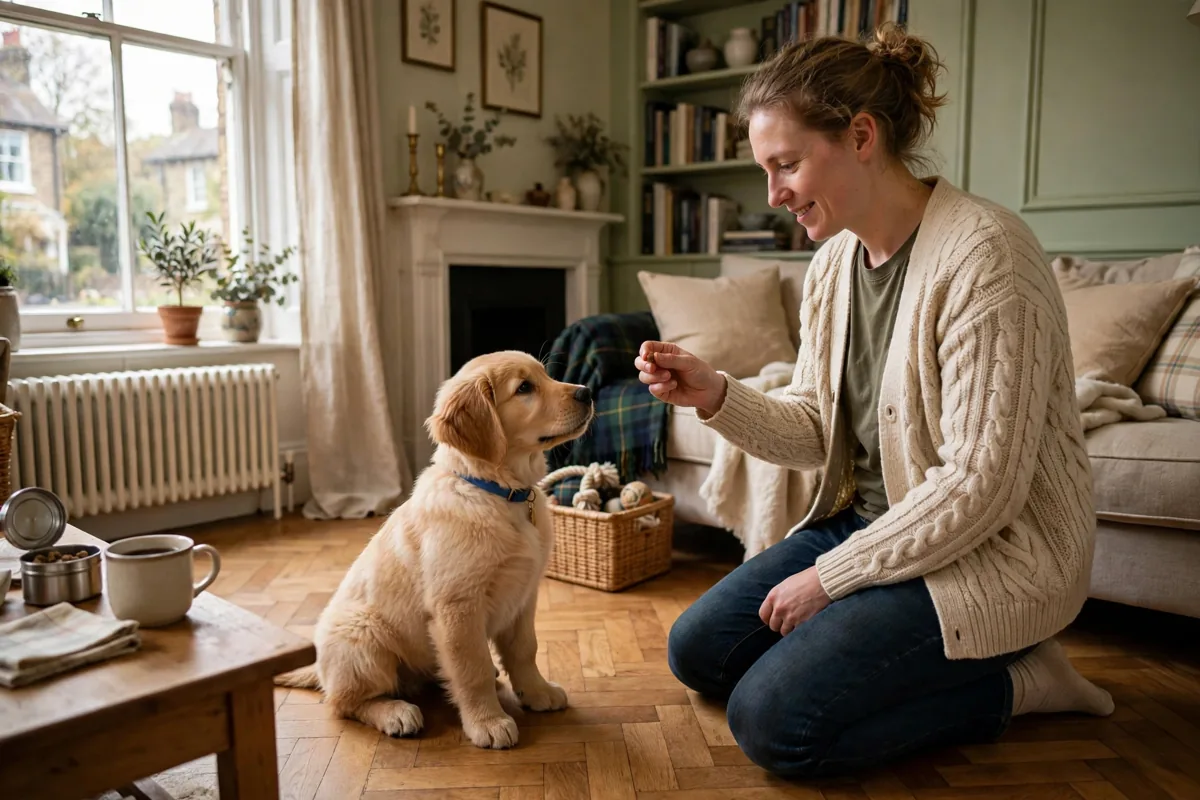
Short sessions of three to five minutes, several times a day, beat one long lesson. Reward-based training with small treats and praise is the fastest route, and every puppy should start with the same core skills.
- Their name: say it once, and reward eye contact. A puppy that looks at you when called is ready to learn everything else.
- Sit: hold a treat just above the nose and move it slowly back; as the puppy’s bottom touches the floor, mark it with a cheerful “yes” and reward.
- Come: start indoors with no distractions. Crouch down, call happily, and make returning to you the best game in the house. Never call a puppy to you and then do something it dislikes.
- Leave it: cover a treat with your hand and reward the puppy for backing away. This one command can prevent a great deal of trouble on walks later.
Keep sessions cheerful and end on a success. If either of you is getting frustrated, stop and play instead; training should always feel like a game to a young puppy.
Socialisation in the First Month
Socialisation means calmly showing your puppy that the world is safe. In the first month, that includes different people, household sounds such as the vacuum and doorbell, car journeys, and short outings carried in your arms or sitting in the car until vaccinations allow paws on the ground. Let the puppy observe at its own pace and pair new experiences with treats.
Avoid overwhelming situations such as busy dog parks or crowds of children all reaching at once. A few positive experiences beat dozens of frightening ones, and a well-socialised puppy grows into a dog that can join family life everywhere, from café gardens to days out supporting local businesses in your community that welcome dogs.
Feeding, Play and Gentle Exercise
Young puppies usually eat three to four small meals a day. Keep the food your breeder or rescue centre used at first, and change gradually over a week if you want to switch. Use mealtimes for training: a handful of kibble earned through sits and recalls is mental exercise as well as lunch.
Physical exercise should be modest while bones are growing. A common guide is about five minutes of lead walking per month of age, twice a day, plus free play in the garden. The rest of the energy can go on sniffing games, gentle tug, and puzzle feeders. If you are building your own fitness back up alongside your new companion, our home exercises for beginners are easy to fit around nap times, and once your dog is grown, our guide to starting running can help you plan towards running together.
Common First-Month Mistakes to Avoid
Most early problems come from kindness rather than neglect. Carrying a puppy everywhere stops it learning to walk confidently on its own feet. Repeating a command five times teaches the puppy to ignore the first four. Feeding from the table builds a beggar, and rough play with hands turns into mouthing that is much harder to stop in a bigger dog.
Second-hand bargains can help keep costs down while you learn what your puppy actually needs: good-quality crates, gates and beds are easy to find in the charity shops thriving on Britain’s high streets, and anything your puppy outgrows can go back the same way.
A Calm First Month Builds a Confident Dog
The first month with a puppy is tiring, funny and over far too quickly. Focus on the puppy training basics that matter most: a predictable routine, toilet training with patience, plenty of sleep, a handful of well-rewarded commands, and gentle exposure to everyday life. Do those things consistently and you will finish the month with a puppy that understands your home, trusts you completely, and is ready for everything you will teach it next.