
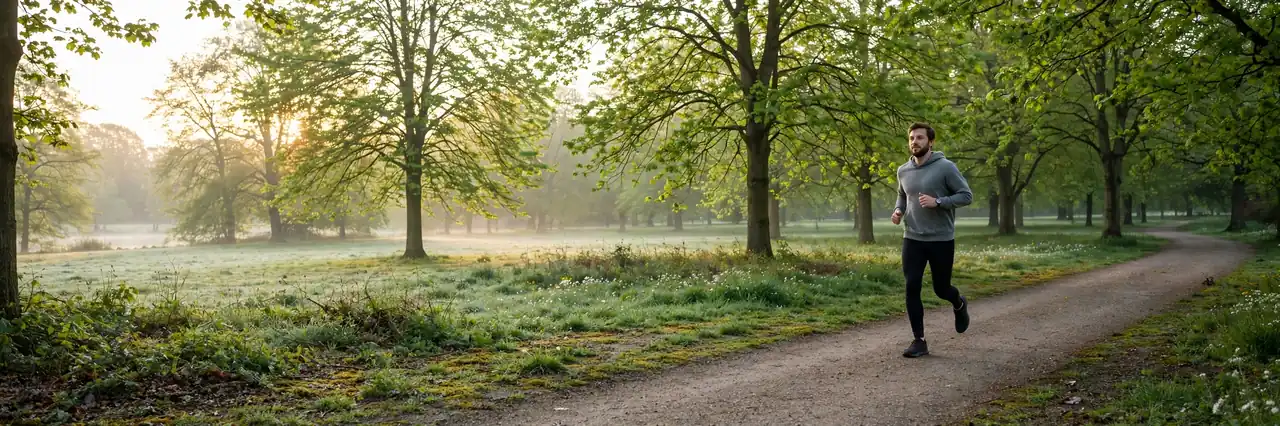
If you have never run further than the end of your street, the idea of covering five kilometres can feel out of reach. It is not. Learning how to start running is mostly about patience: short, easy sessions, repeated often, with enough rest in between for your body to adapt. Thousands of complete beginners follow a simple run-walk plan every year and surprise themselves within eight to ten weeks. This guide walks you through the whole journey, from your first tentative jog to standing on the start line of your first 5K feeling calm and ready.
Why running works for beginners
Running asks very little of you in terms of equipment or organisation. You do not need a gym membership, a team, or a fixed schedule. A decent pair of shoes and thirty spare minutes are enough. The benefits arrive quickly: better sleep, steadier energy through the afternoon, and a clearer head. Many new runners say the mental lift matters more than the fitness. If you enjoy training at home too, our guide to home exercises for beginners pairs well with a running plan on the days you do not run.
There is also something quietly satisfying about measurable progress. In week one you might run for sixty seconds at a time. By week six you are covering distances that would have seemed impossible a month earlier. That visible improvement is what keeps people going long after the novelty wears off.
What you need before your first run
Start with your feet. Proper running shoes, fitted at a specialist shop if you can manage it, protect your knees and shins far better than worn-out trainers. You do not need the most expensive pair; you need the pair that suits your gait and feels comfortable from the first step. Beyond shoes, keep it simple: breathable clothing you can move in, a sports watch or a free phone app to track time, and a water bottle for afterwards.
A quick health note: if you have a heart condition, joint problems, or you have been inactive for a long time, check in with your GP before you begin. For most healthy adults, a gentle run-walk plan is a safe and sensible way to start.
How to start running with the run-walk method
The single most useful technique for beginners is the run-walk method. Instead of running until you are exhausted, you alternate short running intervals with walking breaks from the very first session. This keeps your breathing under control, reduces injury risk, and lets you build endurance steadily.
Weeks one and two
Three sessions a week, on non-consecutive days. Warm up with five minutes of brisk walking. Then repeat this pattern eight times: run gently for one minute, walk for two minutes. Finish with five minutes of easy walking. The running should feel almost embarrassingly slow. If you cannot hold a conversation, you are going too fast.
Weeks three and four
Stretch the running intervals: run for two minutes, walk for one minute, repeated eight to ten times. By the end of week four, try one continuous ten-minute run at the same easy pace. You will be amazed how manageable it feels. On rest days, gentle stretching or a session from our guide to yoga poses and their benefits helps your legs recover and keeps stiffness away.
Building to 5K in weeks five to eight
Now the shape of your training changes. Keep three runs a week, but make them different from each other. One run stays short and easy. One run gradually lengthens: add five minutes each week until you reach thirty-five to forty minutes of mostly continuous running. The third run can include a few slightly faster minutes in the middle, once you feel comfortable, but never so fast that your form falls apart.
By week seven or eight, cover the full 5K distance in training, even if you still take one or two short walking breaks. There is no rule that says a real 5K must be run without stopping. Plenty of experienced runners use planned walk breaks in much longer races.
Common beginner mistakes to avoid
The classic error is doing too much, too soon. Enthusiasm in week one leads to daily runs, sore shins by week two, and quitting by week three. Your muscles adapt faster than your tendons and bones, so respect the rest days; they are when the improvement actually happens. A second mistake is comparing yourself to others. The runner gliding past you in the park may have a decade of training behind them. Your only competition is last week’s version of you.
Finally, do not neglect the mental side of training. Running gives your mind rare unstructured time, and many people find it helps them think clearly. If you enjoy that reflective quality, you might also like our piece on keeping your mind in the best condition, and our look at mental health word searches as a gentle workout for your brain on rest days.
Fuelling, sleep and staying motivated
You do not need a special diet to train for a 5K, but a few habits make training noticeably easier. Eat a light carbohydrate-based snack, such as a banana or a slice of toast, an hour or two before a run, and have a proper meal with some protein within an hour or so of finishing. Drink water through the day rather than a huge amount just before you head out. Sleep matters more than any supplement: your body repairs muscle and consolidates fitness while you rest, so aim for regular nights rather than heroic weekend lie-ins.
Motivation dips for everyone around week three or four, when the novelty fades but the big improvements have not arrived yet. Plan for it. Put your sessions in the diary like appointments, lay your kit out the night before, and tell a friend what you are doing so someone asks about it. Running with a partner or a local beginner-friendly group, even once a week, makes the solo sessions easier to stick to. And keep a simple log: distance, time, and one line about how it felt. On a flat day, looking back at how far you have come since week one is the most reliable motivation there is.
Your first 5K: what to expect
Choose a friendly local event, ideally a parkrun or a small charity run, and treat it as a celebration rather than an exam. Lay your kit out the night before, eat a light breakfast you have tried before, and arrive early enough to find the toilets and the start line without rushing. Start slower than you think you should; the crowd will pull you along, and a steady first half leaves you strong for the finish.
Afterwards, give yourself a proper rest day and something enjoyable. A gentle wander around your local high street works well; as we noted in our article on why charity shops are thriving on Britain’s high streets, you might even find a bargain pair of running shoes for your next goal. Because there usually is a next goal: a faster 5K, a 10K, or simply the habit of running three times a week for the rest of the year. However far you take it, it all starts with that first one-minute jog.