
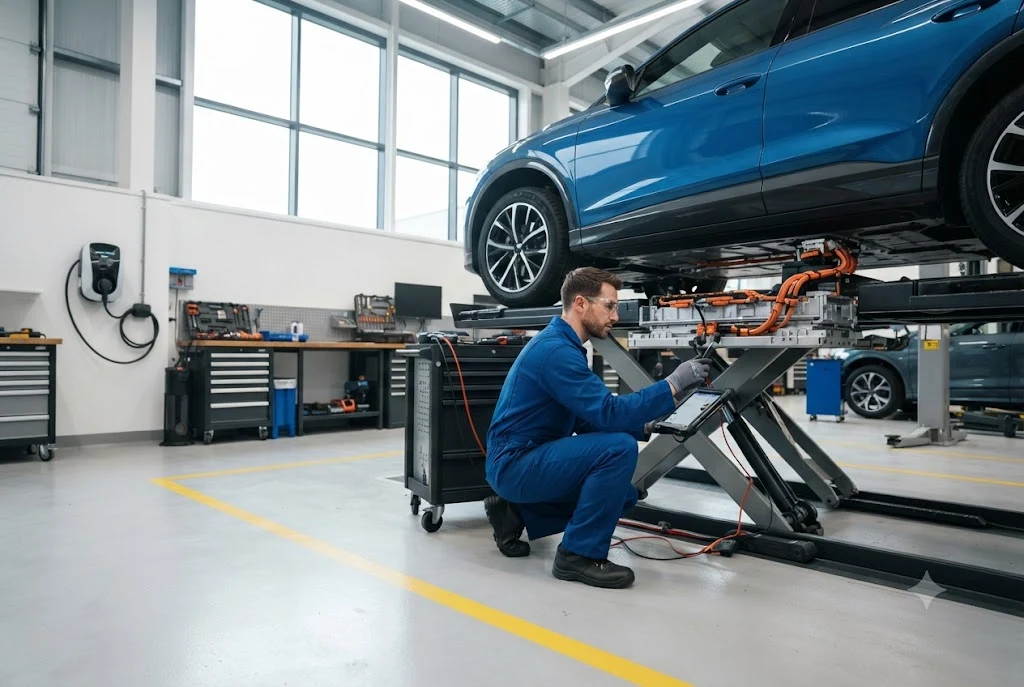
Electric vehicle servicing is an essential part of owning an electric car, even though EVs generally require less maintenance than petrol or diesel vehicles. While electric vehicles have fewer moving parts and no engine oil to replace, they still rely on regular inspections to ensure they remain safe, efficient, and reliable. Understanding what an EV service includes can help UK drivers maximise battery performance, extend vehicle lifespan, and reduce the risk of unexpected repairs.
As electric vehicle adoption continues to grow across the UK, manufacturers and independent garages are expanding their EV servicing capabilities. Knowing what to expect during an electric vehicle service makes it easier to choose the right maintenance schedule and qualified technician.
What Is Electric Vehicle Servicing?
Electric vehicle servicing involves inspecting and maintaining the key systems that keep an EV operating safely and efficiently. Unlike conventional vehicles, electric cars do not require engine oil changes, spark plug replacements, or exhaust system maintenance.
Instead, technicians focus on electrical systems, battery health, braking components, software updates, suspension, tyres, and general safety inspections.
Why Electric Vehicle Servicing Is Important
Although electric vehicles require less routine maintenance, servicing remains essential for identifying wear and maintaining performance.
Battery Health Monitoring
The high-voltage battery is the most valuable component of an EV. Regular inspections help identify software issues, cooling system concerns, or abnormal battery performance before they become significant problems.
Brake System Inspection
Regenerative braking reduces brake wear, but brake discs and pads still require periodic inspection because corrosion can occur if they are used less frequently.
Safety Checks
Qualified technicians inspect high-voltage cables, charging components, suspension, steering, lighting, tyres, and other safety-critical systems.
Software Updates
Many manufacturers release software updates that improve battery management, charging efficiency, safety systems, and overall vehicle performance.
What Does an Electric Vehicle Service Include?
A professional electric vehicle service typically includes:
- High-voltage battery inspection
- Battery cooling system checks
- Charging cable inspection
- Charging port examination
- Brake inspection
- Tyre condition and pressure checks
- Steering and suspension inspection
- Air conditioning system check
- Cabin air filter replacement (if required)
- Software and firmware updates
- Diagnostic system scan
- Lighting and electrical system inspection
The exact checklist varies between manufacturers and vehicle models.
How Often Should an EV Be Serviced?
Most manufacturers recommend servicing an electric vehicle every 12 months or after a specified mileage, whichever comes first.
However, servicing intervals differ depending on:
- Manufacturer recommendations
- Annual mileage
- Driving conditions
- Vehicle age
- Battery warranty requirements
Always refer to your owner’s handbook for the recommended maintenance schedule.
Do Electric Cars Need Less Maintenance?
Yes. Compared with petrol and diesel vehicles, servicing electric cars generally involves fewer routine maintenance tasks.
Electric vehicles do not require:
- Engine oil changes
- Oil filters
- Spark plugs
- Timing belts
- Fuel filters
- Exhaust repairs
- Clutch replacements (on most EVs)
However, tyres, suspension, brakes, coolant systems (where fitted), and electrical components still require professional attention.
Who Should Service an Electric Vehicle?
Because EVs contain high-voltage electrical systems, servicing should only be carried out by technicians trained to work on electric vehicles.
Many manufacturer dealerships and independent garages now employ technicians with specialist EV qualifications and equipment.
Keeping Accurate EV Service Records
Every completed service should be recorded to maintain your vehicle’s maintenance history. Accurate records support resale value and demonstrate that servicing has been completed according to manufacturer recommendations.
Our guide to service book car explains why maintaining detailed service records remains important, even for modern electric vehicles.
Electric Vehicle Servicing vs Traditional Car Servicing
While both involve routine inspections, the focus differs considerably.
Traditional servicing centres on engine maintenance, lubrication, and fuel systems, whereas service electric car appointments prioritise battery systems, electrical safety, diagnostics, and software.
This difference often means servicing costs may be lower for EVs, although labour rates and manufacturer requirements vary.
Choosing the Right EV Service Provider
Before booking an EV service, consider:
- Whether technicians are EV-qualified.
- Availability of manufacturer-approved diagnostic equipment.
- Experience with your specific vehicle brand.
- Transparent pricing.
- Warranty compliance.
- Customer reviews and reputation.
Planning Long-Term EV Maintenance
Keeping a consistent servicing schedule is one of the best ways to maintain long-term reliability. If you’re looking for predictable maintenance costs, our guide on car service plan explains how service plans can help spread servicing expenses over time.
Frequently Asked Questions
Do electric cars need annual servicing?
Yes. Most manufacturers recommend annual inspections, although the required maintenance differs from conventional vehicles.
Is EV servicing cheaper?
Often yes, because there are fewer mechanical components requiring regular replacement. Costs vary depending on the vehicle and service provider.
Does servicing affect the battery warranty?
Following the manufacturer’s recommended servicing schedule may be necessary to maintain warranty coverage, so always check your warranty documentation.
Conclusion
Electric vehicle servicing is essential for maintaining battery health, vehicle safety, software performance, and long-term reliability. Although EVs require less routine maintenance than petrol or diesel cars, regular professional inspections remain an important part of responsible ownership.
Choosing qualified technicians, following the manufacturer’s maintenance schedule, and keeping complete service records will help protect your investment while ensuring your electric vehicle continues to perform efficiently for years to come.
For official information about electric vehicles and charging infrastructure in the UK, visit the UK Government guidance on zero-emission vehicles.
As electric vehicle ownership becomes increasingly prevalent in the UK, understanding the nuances of servicing is paramount for ensuring longevity and performance. While the servicing process for EVs differs from traditional vehicles, it is equally important to grasp the time commitments involved. Factors such as the type of service being performed—be it routine checks, battery assessments, or software updates—can significantly impact the duration of the visit. For those curious about the typical timelines associated with vehicle maintenance, it’s worthwhile to explore insights on how long does a car service take, as this knowledge can aid in planning and managing expectations when scheduling your next appointment. By blending an understanding of service duration with specific EV needs, owners can better navigate their maintenance journeys and ensure their vehicles remain in optimal condition.