
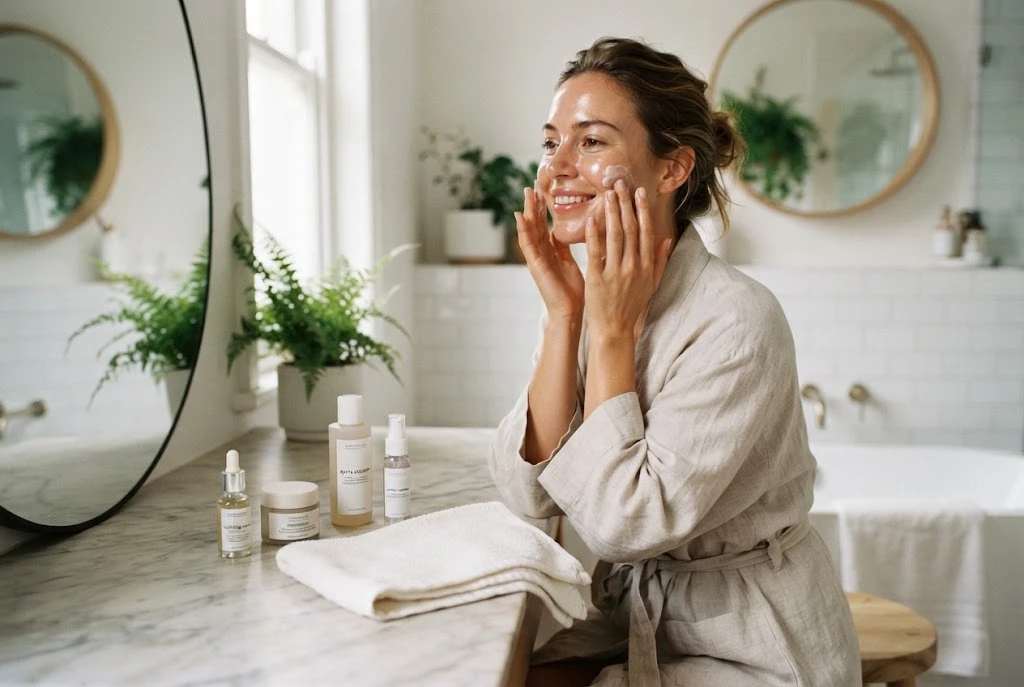
Good skin hydration tips can make a noticeable difference to how comfortable and healthy-looking your skin feels. Skin that lacks moisture may feel tight, rough, flaky, or uncomfortable, while well-hydrated skin generally feels softer and more supple. The good news is that supporting hydration does not require an unnecessarily complicated skincare routine. A consistent combination of gentle cleansing, suitable moisturisation, and sensible daily habits can provide a strong foundation.
Understanding the difference between hydration and simply adding more products is also important. Your skin needs both water and a healthy moisture barrier to remain comfortable. By choosing products according to your skin type and avoiding habits that unnecessarily strip the skin, you can build a practical hydration skincare routine that fits easily into everyday life.
What Does Skin Hydration Mean?
Skin hydration refers to the amount of water present in the skin. Hydrated skin tends to feel smoother and more comfortable, while insufficient water can contribute to a tight or dull appearance.
Hydration should not be confused entirely with oil or sebum. Skin can produce plenty of oil while still feeling dehydrated. This is one reason why oily skin should not automatically be treated with harsh, drying products.
A good skincare approach therefore considers both hydration and the skin’s ability to retain moisture. This is where the skin moisture barrier becomes particularly important.
Why the Skin Moisture Barrier Matters
The outermost layer of the skin helps reduce water loss and provides a protective barrier against environmental factors. When this barrier becomes compromised, skin may become dry, sensitive, rough, or uncomfortable.
Over-cleansing, excessive exfoliation, very hot water, unsuitable products, and harsh skincare habits can all make skin feel more stripped. Supporting the barrier means keeping your routine gentle and using products that help maintain comfortable moisture levels.
If your main concern is persistent dryness, our guide to dry skin care provides more targeted advice on creating a routine for dry skin.
Skin Hydration Tips for Everyday Skincare
The simplest way to improve your hydration routine is to focus on a few consistent habits rather than continually adding new products.
1. Use a Gentle Cleanser
Start with a cleanser that removes everyday dirt, excess oil, and makeup without leaving your skin feeling excessively tight. A cleanser that makes your face feel uncomfortable immediately after washing may not be the best fit for your skin.
There is no need to scrub aggressively. Gently massage the cleanser over your face and rinse with lukewarm water. Pat the skin dry instead of rubbing it vigorously with a towel.
2. Moisturise Regularly
Moisturiser is one of the most practical ways to support comfortable skin. It helps reduce moisture loss and can leave the skin feeling softer and less tight.
Apply moisturiser consistently rather than waiting until your skin becomes extremely dry. The right texture depends on your skin type. Richer creams may feel more comfortable on dry skin, while lighter lotions or gels can be preferable for people who dislike a heavy finish.
3. Moisturise After Cleansing
Applying moisturiser after cleansing can help make hydration part of your normal routine. Instead of leaving freshly cleansed skin without any moisturising step, apply a suitable product according to its directions.
This is particularly useful if cleansing tends to leave your skin feeling tight. Keeping the process simple makes it easier to maintain morning and evening.
4. Avoid Excessively Hot Water
Long, hot showers and very hot water on the face can leave some people’s skin feeling dry or irritated. Lukewarm water is generally a more comfortable option for everyday cleansing.
If your skin regularly feels tight after washing, consider whether water temperature, cleansing frequency, or your cleanser could be contributing to the problem.
5. Do Not Over-Exfoliate
Exfoliation can have a place in a skincare routine, but more is not necessarily better. Frequent or aggressive exfoliation may leave the skin feeling irritated and uncomfortable.
If you use exfoliating products, follow their directions carefully and avoid combining numerous potentially irritating products without understanding how they interact with your skin.
How to Hydrate Skin During a Daily Routine
Knowing how to hydrate skin becomes much easier when hydration is incorporated into both morning and night care.
A straightforward morning routine can include gentle cleansing, moisturiser, and appropriate daytime sun protection. At night, cleanse away makeup, sunscreen, and everyday buildup before applying moisturiser.
If your skin needs additional hydration, you may consider a hydrating serum or similar product. However, additional layers should serve a specific purpose rather than being added simply because they are popular.
Our earlier guide to a face care routine covers the broader structure of morning and night skincare and can help you place hydration into your overall routine.
Skin Hydration Tips for Dry Skin
Dry skin often needs extra attention because it can feel tight, rough, flaky, or uncomfortable. A suitable dry skin routine should focus on gentle cleansing and consistent moisturisation.
Choose a moisturiser that feels comfortable and provides enough richness for your skin. If a lightweight lotion disappears quickly but leaves your skin feeling dry again, a richer cream may be worth considering.
Weather can also affect how dry skin feels. Cold outdoor conditions, low humidity, and indoor heating can contribute to discomfort. During these periods, you may find that your usual moisturiser needs to be used more consistently.
For more detailed guidance, see our dedicated article on dry skin care.
Face Hydration Tips for Oily Skin
Oily skin still needs hydration. One common mistake is assuming that oily skin should be dried out as much as possible. Excessively harsh cleansing can leave the skin feeling stripped without necessarily solving oiliness.
Look for lightweight moisturising products that feel comfortable on your skin. A gentle cleanser can also help you maintain a consistent routine without relying on aggressive products.
If your skin becomes noticeably shiny during the day, focus on a balanced routine rather than removing every trace of oil. Our guide to oily skin care covers additional considerations for cleansing and moisturising oily skin.
Hydration for Combination Skin
Combination skin can be challenging because different areas of the face may have different needs. The T-zone may appear oilier, while the cheeks or other areas can feel normal or dry.
A balanced moisturiser can provide a useful starting point. You can then pay attention to how different areas respond instead of automatically applying heavy products everywhere.
Our combination skin care guide explores how to build a routine around these different needs.
Moisturising Tips for a Better Routine
Choosing a moisturiser is only part of the process. How and when you use it can also influence how practical your routine feels.
- Choose a moisturiser that suits your skin type and preferred texture.
- Apply it consistently rather than only when your skin feels extremely dry.
- Use an appropriate amount according to the product instructions.
- Pay attention to how your skin feels after application.
- Adjust the texture of your moisturiser when seasonal conditions change.
- Avoid repeatedly switching products without giving your routine time to settle.
If a product causes persistent burning, redness, itching, or irritation, stop using it and consider seeking appropriate professional advice.
Does Drinking Water Hydrate Your Skin?
Staying adequately hydrated is important for general health, but drinking excessive amounts of water is not a substitute for a well-designed skincare routine. Skin hydration is influenced by multiple factors, including the condition of the outer skin barrier and the products used on the skin.
Rather than relying on water intake alone as a solution for dry or uncomfortable skin, consider the complete routine. Gentle cleansing, suitable moisturisation, and protection from environmental exposure can all play a role in maintaining comfortable skin.
If you are concerned about your overall fluid intake or have a medical condition that affects hydration, follow advice from an appropriate healthcare professional.
Environmental Factors That Can Affect Skin Hydration
Your environment can influence how your skin feels. Cold weather, dry indoor air, wind, and heating can all make dryness more noticeable for some people.
You can respond by adjusting your routine rather than completely replacing it. For example, a richer moisturiser may feel more comfortable during colder months, while a lighter texture may be preferable in warmer weather.
Pay attention to patterns. If your skin becomes consistently tighter after spending time in a particular environment, consider whether temperature, humidity, cleansing, or product use could be contributing to the change.
Common Skin Hydration Mistakes
One mistake is using too many products at once. Layering multiple serums, exfoliants, masks, and treatments can make it difficult to determine which products are actually helping your skin.
Another mistake is confusing a temporary surface sensation with lasting hydration. A product may initially make skin feel soft, but a good routine should also remain comfortable over time.
Over-cleansing is another common issue. If your face feels tight immediately after washing, reassess the cleanser and cleansing habits instead of simply adding more products afterward.
Finally, people sometimes ignore the needs of their individual skin type. A moisturiser that works well for one person may feel too heavy or too light for someone else.
How to Build a Hydration Skincare Routine
A practical hydration skincare routine can remain very simple. In the morning, cleanse gently if needed, apply moisturiser, and use suitable sun protection. At night, remove makeup and daily buildup, cleanse gently, and moisturise.
If additional hydration is needed, introduce one targeted product at a time. This approach makes it easier to identify what works for your skin and reduces unnecessary complexity.
Consistency is more important than constantly changing products. A simple routine that you follow regularly can be more practical than a complicated routine that becomes difficult to maintain.
When to Get Professional Advice
Skincare can help with everyday dryness and comfort, but persistent or severe symptoms may need professional assessment. If your skin repeatedly cracks, becomes very inflamed, develops unexplained changes, or remains uncomfortable despite simplifying your routine, consider speaking with a qualified healthcare professional or dermatologist.
Professional advice can also be useful if you suspect that an underlying skin condition is contributing to ongoing dryness or sensitivity.
Skin Hydration Tips: Keep Your Routine Balanced
The most useful skin hydration tips are often the simplest: cleanse gently, moisturise consistently, avoid unnecessarily harsh habits, and adapt your routine to your skin and environment.
Remember that hydration is not only about adding a hydrating product. Supporting the skin moisture barrier and avoiding excessive stripping are equally important. Once you understand how your skin behaves, you can choose products and routines that are easier to maintain.
For a broader approach, combine these hydration principles with a consistent face care routine and then adapt it according to whether your skin is dry, oily, or combination. This creates a more personalised approach without making everyday skincare unnecessarily complicated.
For more practical beauty and skincare guidance, visit Strivor.
Authoritative source: For general information about looking after your skin and recognising when professional medical advice may be appropriate, consult the NHS guidance on skin health.
Incorporating effective hydration strategies into your skincare regimen is pivotal not only for aesthetic appeal but also for the overall health of your skin. As we explore the nuances of moisture retention, it becomes clear that a well-rounded approach is essential. This includes understanding how various environmental factors and lifestyle choices impact skin hydration. For instance, excessive exposure to harsh weather conditions or neglecting to drink enough water can exacerbate dryness. Therefore, integrating practical tips focused on nurturing your skin can enhance your hydration efforts. For those seeking actionable insights, exploring comprehensive strategies for dry skin care can further empower individuals in their quest for soft, healthy skin. By aligning your hydration practices with informed choices, you can achieve a more resilient and vibrant complexion.