
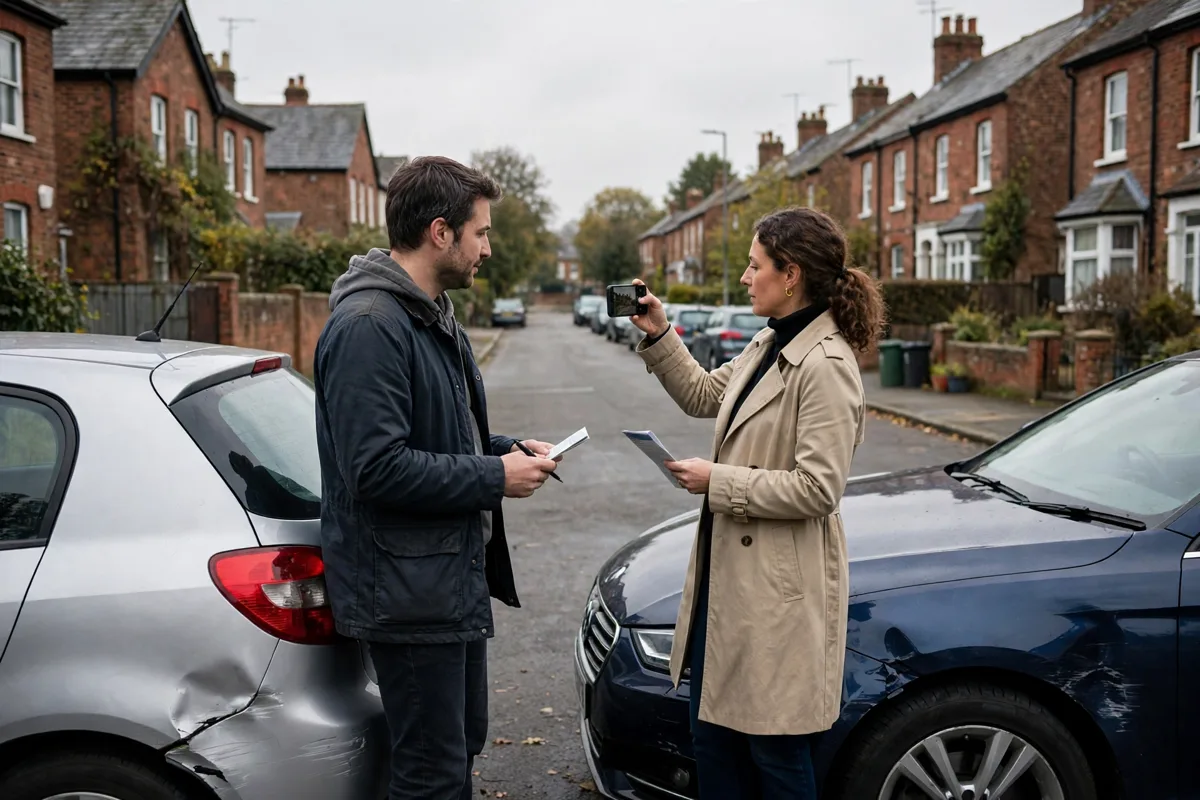
A minor collision can shake you up even when nobody is hurt and the cars barely look marked. In those first confused minutes it is easy to forget a step that later makes the difference between a smooth insurance process and weeks of avoidable hassle. Knowing exactly what to do after a car accident in the UK turns a stressful moment into a manageable routine: stop safely, swap the right details, gather solid evidence and let your insurer handle the rest.
This guide walks through each step in order, explains the legal duties that apply on British roads, and highlights the small mistakes that cause the biggest problems later.
Step 1: Stop Safely and Check Everyone Is Okay
The very first thing to do is stop. Under the Road Traffic Act 1988, a driver involved in an accident that causes injury or damage must stop at the scene; driving away is an offence. Pull over where it is safe, switch on your hazard lights and turn off the engine. If your car is blocking the road and can be moved safely, move it to the side so traffic can pass.
Check yourself, your passengers and anyone in the other vehicle. If anyone is injured, or the road is blocked and cannot be cleared, call 999. Even in a minor bump, take a slow breath before you get out. Rushing leads to forgotten details, and the next ten minutes matter more than most people realise.
Step 2: Exchange the Details the Law Requires
Once it is safe, exchange details with the other driver. You are legally required to give your name and address, the name and address of the vehicle owner if that is someone else, and the registration number of your vehicle. In return, note down the same information from them, plus:
- Their insurance company name and policy number, if they have it to hand
- The make, model and colour of their vehicle
- A phone number you can actually reach them on
- The time, date and exact location of the collision
Be polite and factual. Avoid apologising in a way that sounds like admitting fault, and never argue about who caused the accident at the roadside. Liability is for insurers and evidence to decide, not for a heated conversation beside damaged bumpers. If the other driver refuses to share details or leaves the scene, write down their registration number immediately and report it to the police.
Step 3: Gather Evidence While It Is Fresh
Your phone is the most useful tool you have at the scene. Photograph the position of the vehicles before they are moved if it is safe to do so, the damage to both cars from several angles, the registration plates, and the surrounding road layout including any signs, markings or hazards that played a part. A short video walking around the scene can capture context that still photos miss.
If there were witnesses, ask for their names and contact details. Independent witnesses carry real weight if the two drivers’ accounts later disagree. Dashcam footage is equally valuable, so if your car or a witness’s car has one, make sure the relevant clip is saved before it is overwritten. Dashcam footage is now routinely used by UK insurers, one part of the wider shift described in our coverage of Lilin Network Technology and the connectivity changing everyday services.
Step 4: Report It to the Police When Required
You do not need the police at every minor accident, but reporting becomes a legal duty in specific situations. If you could not exchange details at the scene, or someone was injured, the accident must be reported to the police as soon as reasonably possible and within 24 hours. In England, Scotland and Wales you can usually do this online or by calling 101 for non-emergencies; in an emergency, always 999.
Keep a note of the reference number you are given. Your insurer may ask for it, and it protects you if the other party later claims you never reported the incident.
Step 5: Tell Your Insurer, Even If You Do Not Claim
Almost every UK motor policy makes it a condition that you report any accident promptly, even a tiny one and even if you decide not to claim. Failing to tell your insurer can give them grounds to refuse a future claim or even void the policy. Most insurers let you report by phone or through their app, and they will ask for exactly the details you collected in steps two and three.
Be careful about unsolicited calls after an accident offering “free” replacement cars or compensation help. Accident management companies sometimes obtain details and sign drivers up for expensive credit hire agreements. If in doubt, deal only with your own insurer or a firm you have chosen yourself. Drivers shopping around after a bump may also find it useful to see how large service organisations earn customer trust, as our SS&C Technologies reviews explore.
Step 6: Sort the Repairs and Keep Every Record
Once the claim is open, your insurer will usually direct you to an approved repairer or ask for estimates. If you would rather choose your own garage, our auto services guidance sets out what a trustworthy repair service looks like. Keep every document: repair quotes, invoices, correspondence, and receipts for any reasonable expenses such as travel while your car is off the road. If the accident was not your fault, some costs may be recoverable from the other driver’s insurer, and paperwork is what makes recovery possible.
Write down your own account of what happened while it is fresh, including the weather, the light, your speed and the sequence of events. Memory fades surprisingly quickly, and a clear note written the same day is far more persuasive than a reconstruction attempted months later.
Do Not Ignore Delayed Symptoms
Adrenaline masks pain. Neck stiffness, headaches and back discomfort from whiplash-type injuries often appear a day or two after a minor collision. If you develop symptoms, get checked promptly through your GP, an urgent treatment centre or NHS 111 for advice, and tell your insurer you have done so. Our health and wellness articles cover everyday wellbeing topics, but medical concerns after an accident always deserve proper professional attention rather than guesswork.
Mistakes That Make a Minor Accident Worse
A few avoidable errors cause most of the trouble that follows small collisions. Accepting cash at the roadside to “keep insurers out of it” leaves you exposed if hidden damage or injuries appear later. Admitting fault before the facts are reviewed can prejudice your claim. Missing your insurer’s reporting deadline, losing witness details, and letting dashcam footage overwrite itself all weaken your position. Finally, failing to check on passengers, especially children and older relatives, in the days afterwards can mean injuries go unrecorded.
None of the steps in this guide are complicated. Stop, check, exchange, record, report and inform: six calm actions that protect your legal position, your insurance cover and everyone involved. Keep a note of them in your glovebox or phone, and a bad moment on the road stays exactly that, a moment, rather than turning into a month of paperwork and disputes.