
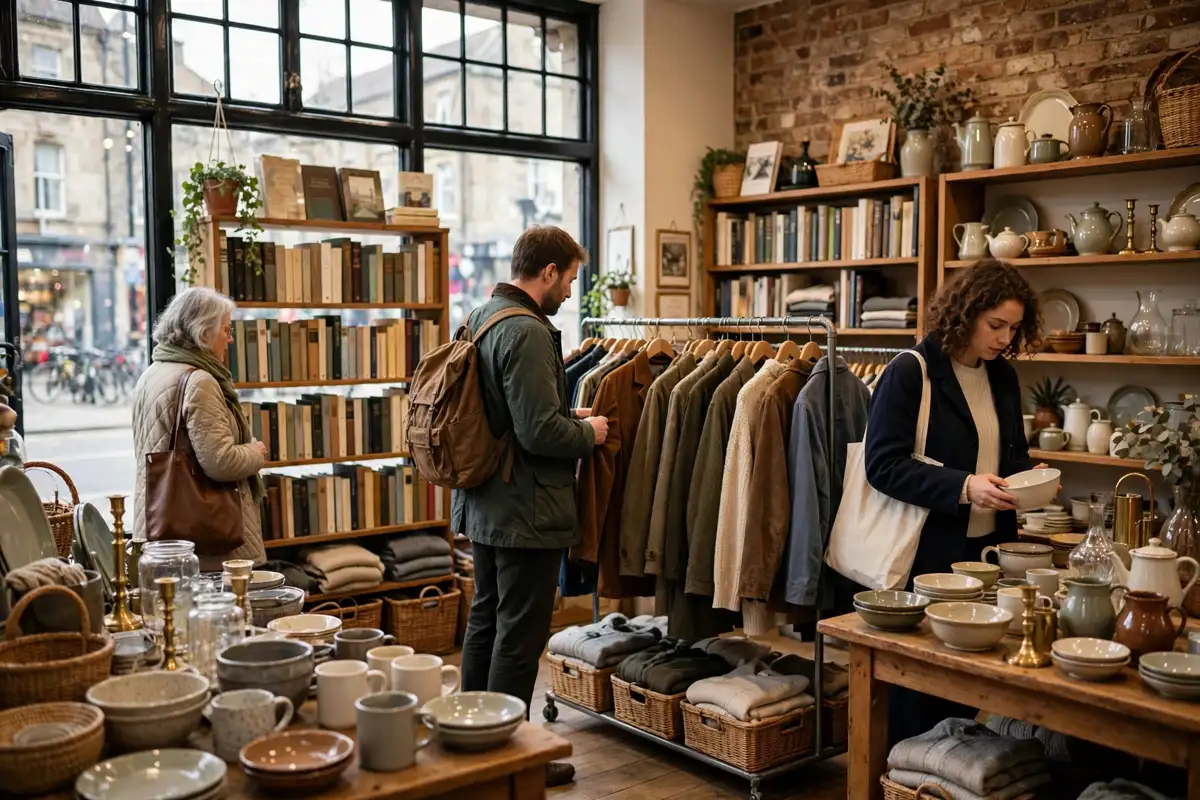
Walk down almost any British high street and you will notice something that would have seemed unlikely twenty years ago: the charity shop is no longer the quiet, dusty store at the end of the parade. It is the busy one, with a styled window, a queue at the till and a rail of vintage jackets that sells out by the weekend. Charity shops in the UK have become genuine retail success stories, and their rise says a great deal about how the country now shops, saves and thinks about waste.
So why are they thriving while so many familiar chain stores have disappeared? The answer is a mix of economics, fashion, sustainability and community spirit that few other retailers can match.
From Frumpy to Fashionable
The biggest shift is image. Charity shops were once associated with worn-out jumpers and chipped crockery, bought out of necessity. Today they are hunted by students, vintage collectors and fashion-conscious shoppers who treat a Saturday charity shop run as a treasure hunt. The appeal of finding a designer label, a first-edition book or a piece of mid-century furniture for a few pounds is powerful, and social media has amplified it: pre-loved “haul” videos and upcycling accounts have made second-hand shopping something to show off rather than keep quiet.
Retailers have responded professionally. Many charity shops now steam and style clothing properly, price desirable brands realistically, arrange stock by size and colour, and dress their windows like boutiques. Some chains run dedicated vintage, furniture or bridal stores, and most of the large charities sell their best donations online as well as in store.
The Economics Behind the Counter
Charity shops enjoy structural advantages that commercial rivals envy. Their stock is donated rather than bought, their shelves are staffed largely by volunteers, and charity shops in England and Wales receive mandatory relief of 80 per cent on business rates, with many councils topping that up to the full amount. Those savings flow back into the charity’s work, from hospice care and air ambulances to animal rescue and homelessness services.
For shoppers, the value is obvious at a time of tight household budgets. School uniforms, children’s clothes that are outgrown in months, books, toys and kitchen essentials all cost a fraction of their new price. Our business and finance coverage regularly notes how households are stretching budgets further, and charity shops have become part of that weekly routine for millions of people.
Shopping With a Clearer Conscience
Sustainability is the second great driver. Buying second-hand keeps usable goods in circulation and out of landfill, and avoids the water, energy and transport involved in making something new. Younger shoppers in particular say they prefer pre-loved clothing for environmental reasons, and the stigma that once attached to wearing used clothes has largely vanished.
There is an honest caveat: charities report that donation quality varies, and the rise of ultra-cheap fast fashion means some donations are too worn to sell. Even so, rag merchants buy unsellable textiles for recycling, so very little donated stock is simply thrown away. Choosing to donate a good-quality coat rather than bin it remains one of the simplest useful things a household can do. More small, practical habits like this appear across our health and wellness pages.
The High Street’s Community Anchor
Charity shops do more than sell. They are among the last genuinely local spaces on many high streets: staffed by neighbours, welcoming to browsers who buy nothing, and often a first source of help or information for people in difficulty. Volunteering in one is a well-trodden route into retail work for young people, returners and retirees alike, offering experience, references and company.
They also fill units that might otherwise stand empty. A bright, busy charity shop keeps footfall alive for the cafés, bakeries and independent stores around it, a pattern our travel features on destinations built on local character have highlighted repeatedly. Town centres that work as social places, not just shopping destinations, are the ones that survive.
Getting the Best From Your Local Charity Shop
A few habits make charity shopping far more rewarding. Visit often, because stock turns over daily and the best pieces go quickly. Go early in the week, when weekend donations have been sorted onto the shelves. Check furniture and electrical stores run by the larger charities for sofas, tables and tested appliances at very low prices. If you are donating, give clean, complete, working items, use Gift Aid if you are a UK taxpayer so the charity can claim an extra 25p for every pound raised from your goods, and take a moment to ask what the shop most needs.
Our lifestyle pages are full of ideas for making a home feel personal on a budget, and a charity shop find, a repaired chair, a shelf of mismatched vintage glasses, does that better than any flat-pack purchase.
Where the Money Actually Goes
It is worth remembering what a charity shop purchase funds. The till in a hospice charity shop helps pay for nurses, beds and family support in that same town. The book you buy from a national charity’s store contributes to medical research, helplines or emergency relief carried out under its name. Unlike a purely commercial transaction, the margin here does not leave the community as shareholder profit; it is converted into services that many people nearby will rely on at some point in their lives.
That local loop, a theme we return to often in our society and culture coverage, explains the loyalty charity shops inspire. Donors see their belongings find new homes, volunteers see the funds raised on their own high street, and shoppers know a bargain for them is also income for a cause they can name. Few other retail formats close that circle so visibly, and it is a powerful reason customers return even when money is less tight.
Challenges on the Horizon
The sector is not without pressures. Energy and staffing costs have risen, volunteer numbers dipped in many areas, and competition for good stock is fierce now that selling apps let people monetise their own wardrobes. Some councils and landlords still view charity shops as a lesser use of prime space, despite evidence that occupied units help high streets more than empty ones.
Yet the direction of travel is clear. Charity shops have adapted from the margins of retail to its mainstream by offering the three things modern shoppers want most: value, individuality and a purchase that does some good. On a high street searching for its future, that is a hard combination to beat, and it is why the busiest shop on the parade is so often the one run for a cause.